Ⅰ.What is the working principle of this machine?
In the workshop of a silicon micropowder processing plant in Shandong, the technical director, Engineer Wang, was staring at a warehouse piled with semi-finished products—traditional vibrating screens frequently clogged when handling 10 μm ultrafine powder, and dust dispersion was affecting product quality. That changed when they encountered a small negative pressure air flow sieve:
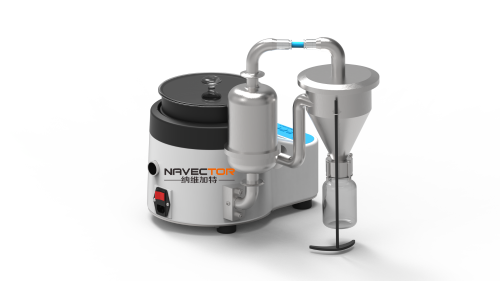
After the equipment starts, an external dust collector reduces the pressure inside the screening chamber to a negative level. The silicon micropowder forms a dynamic suspension under the combined effect of airflow traction and gravity. At this point, the adjustable high-speed airflow released by the air nozzle acts like a “fine comb,” thoroughly dispersing the agglomerated silicon micropowder particles. The negative pressure environment allows fine powder to quickly pass through the screen mesh, while coarse particles settle automatically under gravity. This “airflow + screening” principle enabled Engineer Wang’s production line to achieve continuous 24-hour operation without screen clogging for the first time.
Ⅱ.Why can it solve the agglomeration problem?
Silicon micropowder, as a typical low-density and highly electrostatically sensitive material, is prone to particle agglomeration during the screening process. In one experiment, engineers fed the same batch of silicon micropowder into a vibrating screen and an air flow sieve respectively:
Vibrating screen group: obvious caking occurred after 30 minutes, and screening efficiency dropped to 45%
Air flow sieve group: the vortex airflow generated by the air nozzle continuously impacted the material surface, combined with the “air cushion effect” formed by negative pressure suction, reducing the agglomeration rate by 82%, ultimately achieving a 10 μm classified product with 99.6% purity
This difference stems from the unique “dynamic dispersion + directional conveying” mechanism of the air flow sieve, effectively avoiding the risk of secondary agglomeration caused by mechanical vibration.
Ⅲ.Who needs this type of equipment the most?
When you encounter the following scenarios, it may be the right time to introduce a small negative pressure air flow sieve:
Manufacturers of electronic materials and ceramic glazes requiring stable production of 10–50 μm ultrafine powders
Chemical enterprises handling electrostatic-prone materials such as nano calcium carbonate and aluminum hydroxide
Pharmaceutical and daily chemical plants performing precise classification of drug intermediates and cosmetic raw materials
Mining and mineral processing workshops upgrading environmental standards and needing to reduce dust emissions
As the procurement director of a carbon powder plant in Shanxi stated: “We process 3 tons of graphite powder per month. After using the air flow sieve, impurity content dropped from 5% to 0.3%, and customer complaints were eliminated.”
Ⅳ.In which production stages can it be applied?
In a typical silicon micropowder processing flow, the small negative pressure air flow sieve can be integrated into three key stages:
Pre-screening stage: pre-classify the material from the ball mill outlet and separate coarse particles above 80 μm
Final screening stage: perform precise 10 μm screening on dried finished products to ensure particle size distribution meets IC packaging requirements
Recovery stage: centrally process micropowder generated during crushing, achieving a recovery rate of over 98%
A glass-ceramics factory in Zhejiang utilized its performance in the waste recovery line to recover reusable powder worth 300,000 RMB annually.
Ⅴ.Under what conditions is it more effective than traditional screens?
Under the following special working conditions, the small negative pressure air flow sieve shows irreplaceable advantages:
Low-temperature environments (<5°C): when the moisture content of silicon micropowder exceeds 0.3%, traditional screens tend to cake, while the airflow pulse function of the air flow sieve maintains material flowability
High-humidity working areas:equipped with anti-static coating and a sealed negative pressure system, effectively suppressing dust explosion risks caused by high humidity (>75% RH)
Intermittent production scenarios: compared to vibrating screens requiring continuous feeding, the air flow sieve can complete batch switching within 0.5–2 seconds, making it more suitable for laboratory sample preparation
A coating factory in Hubei leveraged its ability to handle urgent orders, shortening delivery time from 7 days to 24 hours.
Ⅵ.How to select the right model for your material?
Selection should be precisely matched from three dimensions:
Material property diagnosis: first use a laser particle size analyzer to confirm the D50 value of the material, then evaluate flowability through angle of repose testing. For example, silicon micropowder typically has an angle of repose of around 35°, indicating critical flowability, requiring high airflow velocity nozzle configuration.
Capacity calculation: determine the required screen area based on maximum hourly throughput. If the daily processing volume is 1 ton, it is recommended to select an effective screening area of ≥0.6 m², with a 20% margin reserved for fluctuations.
Process compatibility assessment: if integration with online detection systems is required, choose a modular design model; if space is limited, prioritize a compact vertical layout model.
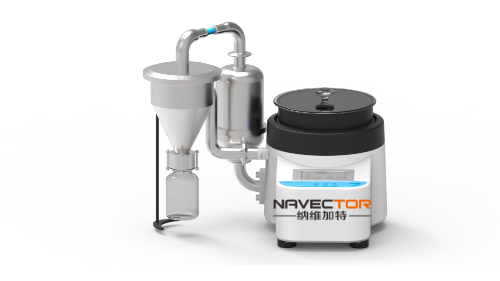
It is recommended to bring samples for on-site testing during selection. By adjusting parameters such as air nozzle pressure (0.1–0.4 MPa) and screen inclination angle (15°–25°), the optimal balance point can be identified.
If you are looking for a stable and reliable 10 μm-level screening solution, please call 15601937055 to schedule a free material test. Our engineering team has successfully served 127 silicon micropowder enterprises and can customize exclusive process solutions based on your production data.
 English
 中文
中文 Español
 ภาษาไทย
 Pусский
 Bahasa Indonesia
 Tiếng Việt