Magnesium alloys have considerable application potential in lightweight structural components, metal 3D printing, and the development of new alloys due to their low density. However, converting molten alloys into metal powders suitable for additive manufacturing requires control over sphericity, particle size distribution, and flowability, while also addressing the oxidation risks associated with magnesium alloys. For the development of new alloys that require repeated compositional adjustments, powder quality, material utilization, and batch-to-batch reproducibility must also be considered, placing higher demands on powder production processes.
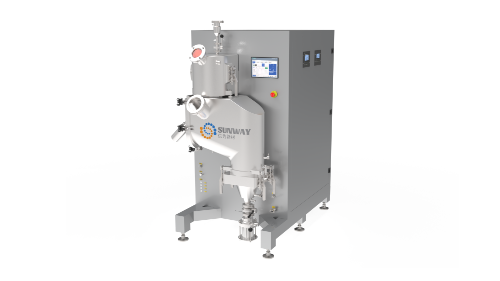
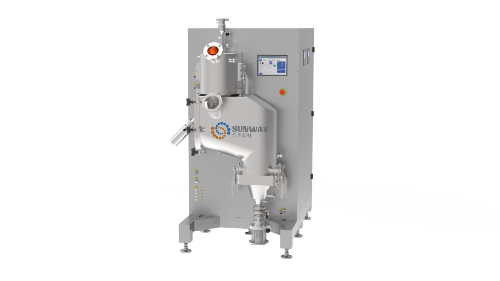
Sunway's ultrasonic atomization powder production machine combines induction melting with ultrasonic atomization, offering a new approach to small-batch magnesium alloy powder production. How does it work? What key aspects of this technology deserve attention when addressing the dual challenges of oxidation control and powder quality? This article examines the equipment's operating principles and explores these questions in detail.
I. Core Challenges: What Makes Magnesium Alloy Powder Production Difficult?
Magnesium is chemically reactive, making oxidation control a key consideration during powder production. From metal melting and atomization to cooling and powder collection, protective measures are required at every stage to reduce the risk of powder oxidation.
Magnesium alloy powders intended for metal 3D printing must meet specific requirements for sphericity, particle size distribution, and flowability. Irregular particle shapes, particle sizes outside the target range, or excessive satellite and hollow particles can all affect powder spreading and the quality of the final printed parts.
Research and development trials also require careful management of raw materials. Alloy compositions often undergo multiple rounds of adjustment and powder production validation, with each batch potentially requiring only several hundred grams to several kilograms of material. Every trial requires powder quality checks, material consumption records, and comparisons between batches. R&D equipment must support small-batch powder production and allow process parameters to be adjusted, enabling researchers to evaluate powder production performance under different conditions.
II. Technical Breakdown: How Does an Ultrasonic Atomization Powder Production Machine Address These Challenges?
1. Combining Induction Melting and Ultrasonic Atomization for Powder Production
Metal raw materials must first be heated until molten, after which the liquid metal is dispersed into fine droplets that solidify into powder upon cooling. An ultrasonic atomization powder production machine uses induction heating to melt the metal, then applies ultrasonic vibrations to disperse the molten metal into fine droplets. Unlike gas atomization, which relies on high-velocity gas streams to break up molten metal, this method uses ultrasonic vibrations to promote droplet formation. It can be used for small-batch metal powder production and alloy development.
2. Vacuum and Inert Gas Protection to Reduce Magnesium Alloy Oxidation Risks
Magnesium alloys are relatively reactive, making oxidation a key concern during powder production. Atmospheric conditions must be carefully controlled throughout melting, atomization, cooling, and collection. The ultrasonic atomization powder production machine controls the processing environment through steps such as vacuum evacuation and protective gas filling. However, the choice of protective gas must be determined according to the material and process requirements, and the oxygen content of the final powder should be confirmed through testing.
3. Compact Equipment Configuration for Small-Batch Powder Production
Small-batch magnesium alloy powder production requires coordination across melting, atomization, and powder collection. Equipment batch capacity and space requirements must also be considered. Sunway's ultrasonic atomization powder production machine offers two crucible capacities, 0.4 L and 0.8 L, to accommodate different small-batch powder production needs. The equipment occupies only a few square meters and does not require complex infrastructure, making it suitable for small-batch metal powder production and alloy research and development.
III. Application Value: Why Is an Alternative Powder Production Method Needed for Small-Batch, Multi-Variety R&D?
1. Small-Batch Powder Production Reduces Raw Material Requirements for Multiple Trials
Developing new alloys often involves multiple rounds of formulation testing. If each powder production run requires a large quantity of raw materials, both material consumption and R&D costs increase. Sunway's ultrasonic atomization powder production machine produces approximately 100 g to several kilograms of powder per batch, depending on the material and process conditions, making it suitable for small-batch powder production trials conducted across multiple experimental runs. Researchers can arrange production according to actual testing requirements, reducing the raw material needed for each trial.
2. Flexible Raw Material Options Facilitate Testing of Different Alloy Formulations
Alloy development involves not only adjusting elemental proportions but also changing the types and combinations of raw materials. This equipment uses crucible-based induction melting and can process final alloys, master alloys, or pure elements as feedstock, rather than being limited to pre-prepared alloy rods. This flexibility facilitates melting and powder production trials involving different raw material combinations, helping researchers explore various alloy compositions according to their research plans.
3. High-Quality Powder Provides a Foundation for Further Application Development
During ultrasonic atomization, molten metal droplets cool and solidify in an inert gas-protected environment, helping produce highly spherical metal powders. Sunway's ultrasonic atomization powder production machine can achieve powder sphericity of ≥95%, powder yield of ≥95%, and an oxygen increase of approximately 50–150 ppm. It can be used to produce magnesium alloy and other metal powders, supporting subsequent material research and application validation.
IV. Suitable Applications: Which Companies Can Benefit Most from Ultrasonic Atomization Powder Production Machines?
Ultrasonic atomization powder production machines are better suited to companies engaged in materials research, small-batch pilot production, or the flexible preparation of multiple types of alloy powders. Their suitability can be assessed based on two main types of requirements.
The first category includes new materials research and metal 3D printing development. These activities frequently involve new alloy development, material property validation, and powder forming trials, requiring different powder batches to be produced according to specific research objectives. Rather than focusing solely on high production volumes, it is more important to determine whether the equipment can meet experimental powder requirements and support multiple rounds of material testing.
The second category includes metal powder manufacturers that require small-batch production across multiple product types. If a company's production tasks do not involve large-scale, continuous powder supply for a single material but instead require flexible scheduling for different materials, the suitability of ultrasonic atomization can be evaluated further. Producing qualified powder is only the starting point for equipment selection; whether the equipment can consistently meet long-term production requirements is the ultimate criterion.
V. Frequently Asked Questions: What Else Should You Know About Ultrasonic Atomization Powder Production Machines?
Question 1: Does Magnesium Alloy Powder Produced by Ultrasonic Atomization Always Have a Lower Oxygen Content?
Not necessarily. Powder oxygen content depends not only on the powder production method but also on the condition of the raw materials, equipment sealing, protective atmosphere, and powder collection process. Whether the final product meets the required specifications must still be confirmed through actual testing.
Question 2: Are Ultrasonic Atomization Powder Production Machines Suitable for Large-Scale Mass Production?
The SWUA series is primarily designed for small-batch powder production and R&D applications. For large-scale production, the actual powder output, yield of powder within the target particle size range, continuous operating capability, and batch consistency must also be evaluated to determine whether the equipment can meet long-term powder supply requirements.
Question 3: How Can You Determine Whether the Produced Metal Powder Meets Quality Requirements?
The evaluation depends on the powder's intended application. Testing typically covers particle size distribution, sphericity, flowability, and oxygen content, together with an examination of particle morphology. For metal 3D printing, actual powder spreading and printing trials should also be conducted to determine whether the powder meets application requirements.
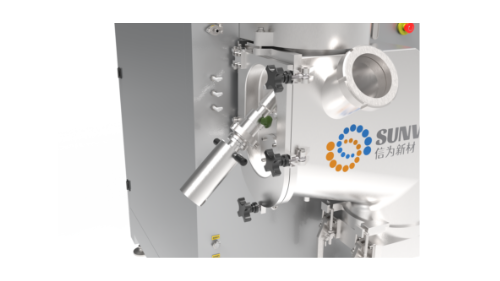
Magnesium alloy powder production requires careful attention to both powder quality and batch consistency, with each batch meeting the intended specifications as closely as possible. Sunway's ultrasonic atomization powder production machine offers an additional option for small-batch magnesium alloy research and development. However, the equipment is only the starting point. Different alloy compositions require different processing conditions, and repeated trials and testing are essential to understand how each material behaves. Through this process, powder production can progress from simply achieving a successful result to consistently producing high-quality powder.
 English
 中文
 Español
 ภาษาไทย
 Pусский
 Bahasa Indonesia
 Tiếng Việt