Biodegradable polymers such as PLA and PLGA are widely used materials for drug-loaded microspheres in the biopharmaceutical field. As microsphere preparation processes continue to evolve and product quality control becomes increasingly precise, downstream processing is gaining greater importance. Microspheres tend to agglomerate, so downstream processing must account for both material distribution and treatment effectiveness, while also ensuring smooth transitions between different process stages. For manufacturers and researchers, key considerations in downstream processing equipment design include maintaining microsphere quality, reducing material transfers, and controlling cleanliness risks during production.
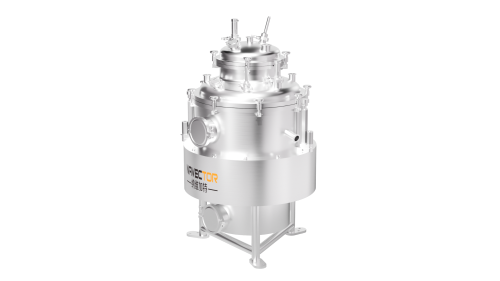
Navector's microsphere sieve integrates filtration, washing, dewatering, and drying into a single piece of equipment. It processes materials through centrifugal separation, negative-pressure fluid separation, and ultrasonic vibration, offering a new approach to microsphere downstream processing. How does it integrate multiple process stages, and what support can it provide for the downstream processing of biopharmaceutical microspheres? This article examines the technical principles and application characteristics of the microsphere sieve to explore the key factors that make it an effective solution for downstream processing challenges.
I. Where Do the Main Challenges Lie in PLA Microsphere Downstream Processing?
Downstream processing of PLA microspheres must balance separation performance, production cleanliness, and process controllability. The material properties of the microspheres themselves affect filtration performance, while coordination between multiple process stages influences material transfer, equipment cleaning, and day-to-day operations.
From a process perspective, after reaction and washing, PLA microspheres still require solid-liquid separation, dewatering, and drying. If each stage uses separate equipment, materials must be transferred between different machines, increasing the number of operational steps. In clean production environments, reducing material exposure, facilitating equipment cleaning, and ensuring smooth transitions between process stages are all important requirements for downstream processing equipment design.
The inherent characteristics of microspheres also affect filtration. PLA microspheres may be influenced by factors such as static electricity and particle agglomeration, resulting in uneven dispersion. When microspheres are distributed unevenly across the filter medium, localized accumulation may affect filtration stability. Equipment must be configured with appropriate filtration methods and operating parameters based on material characteristics and actual processing requirements, while also ensuring compatibility with subsequent dewatering and drying stages.
II. How Does a Microsphere Sieve Integrate Multiple Downstream Processing Stages?
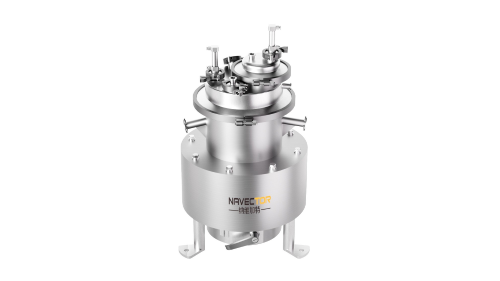
Navector's microsphere sieve integrates filtration, washing, dewatering, and drying into a single machine. Centrifugal separation and negative-pressure fluid separation are used to separate materials, reducing intermediate transfers between process stages. For PLA and PLGA drug-loaded microspheres, this integrated approach helps reduce material exposure during transfer while balancing downstream processing efficiency with production environment requirements.
After material separation, ultrasonic vibration further supports the drying process by distributing the product evenly across the filter screen, improving drying efficiency and reducing the formation of agglomerates. To meet the cleanliness and sterility requirements of biopharmaceutical production, the equipment features a fully enclosed design and is constructed from 316L stainless steel. Material-contact surfaces undergo electropolishing, and the system supports CIP/SIP cleaning and sterilization, reducing the burden associated with manual intervention and cleaning maintenance.
Different microsphere materials have different process requirements, and production scales also vary, so equipment configurations must be selected accordingly. The microsphere sieve is available in different models, including PV10, PV15, and PV20, covering applications from laboratory validation to large-scale production. The equipment also features temperature control and can be configured according to the characteristics of different materials, including PLA and PLGA drug-loaded microspheres, aesthetic microspheres, and IVD microspheres.
III. What Should Be Considered When Selecting a Microsphere Sieve, from Process Requirements to Production Capacity?
Selecting a microsphere sieve requires more than checking whether equipment specifications meet requirements. Its suitability for the actual material and production scale must also be evaluated. For drug-loaded microspheres, three aspects deserve particular attention.
Material compatibility must be evaluated through testing. Different microsphere materials have different properties and process requirements. Material names and equipment specifications alone are insufficient to determine actual processing performance. During equipment selection, tests should be conducted using the actual material to evaluate filtration, dewatering, and drying performance and confirm whether the final product meets the expected condition.
Equipment size must match the actual batch processing volume. The microsphere sieve is available in three models: PV10, PV15, and PV20. Model selection should be based on actual batch requirements, the stage of process validation, and future production plans to avoid a mismatch between equipment capacity and production demand.
Process requirements must be translated into specific equipment configurations. Biopharmaceutical applications have stringent equipment cleanliness requirements. During selection, the material, surface treatment, and CIP/SIP configuration should be checked against the actual process requirements. For projects requiring specific temperature control, filter screen layer counts, or filtration precision, the equipment supplier should confirm whether the corresponding configuration can meet production needs.
IV. Beyond Drug-Loaded Microspheres, What Other Materials Can a Microsphere Sieve Handle?
Microspheres serve a variety of purposes in the biopharmaceutical field, and the range of materials is extensive. From drug-loaded and aesthetic microspheres to chromatographic packing materials and IVD microspheres, the microsphere sieve can be used for solid-liquid separation of relevant materials and can perform downstream processing stages such as filtration, washing, dewatering, and drying under enclosed conditions.
For drug-loaded and aesthetic microspheres, common materials include PLA and PLGA, PLLA used in collagen-stimulating injectable products such as “baby face” injections, and PCL used in injectable products such as Youth Needle. Chromatographic packing materials have an even wider range of compositions. These include polymer microspheres made from silica, polystyrene (PS), and poly(methyl methacrylate) (PMMA), as well as soft polysaccharide microspheres primarily composed of agarose, dextran, and cellulose. Common materials in the IVD field, including fluorescent microspheres, latex microspheres, and inorganic-organic composite magnetic microspheres composed of materials such as iron oxide (Fe₃O₄) and polystyrene, are also within the equipment's application scope. In addition, embolization microspheres and dextran used in cell culture-related applications can also be considered.
A wide variety of materials does not mean that the same processing method can be applied to all of them. Process requirements vary among different microspheres in actual production, so the appropriate configuration must be determined according to material characteristics and production conditions and verified through practical testing. The range of materials an equipment system can handle is important, but its ability to accommodate the specific process is the key consideration in practical applications.
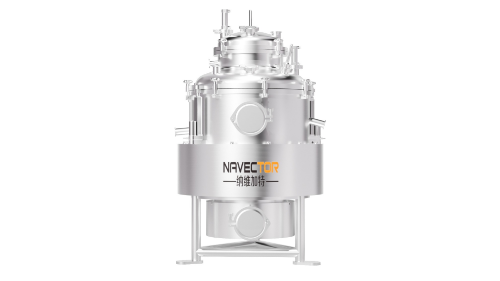
Microsphere downstream processing must account for material characteristics and coordination between process stages, with each stage's treatment method matched to the actual production process. Navector's microsphere sieve integrates filtration, washing, dewatering, and drying into a single piece of equipment, providing an integrated downstream processing solution for PLA and PLGA drug-loaded microspheres and other functional microspheres. By incorporating separation technologies into the microsphere production workflow, equipment design can address actual manufacturing requirements and provide solid support for the consistent production of high-specification microsphere materials.
 English
 中文
 Español
 ภาษาไทย
 Pусский
 Bahasa Indonesia
 Tiếng Việt