Ms. Li, a quality inspector at a food additive factory in Shanghai, has recently been troubled—newly purchased corn starch has been frequently clogging the screen during the screening process, causing quality inspection reports to be delayed by up to three days. “This batch of raw material has slightly higher moisture, and the particles tend to agglomerate. The stronger the vibration of the screening machine, the larger the clumps become.” She adjusted the parameters three times, but the results were still unsatisfactory. It wasn’t until she encountered a small negative pressure airflow sieve that the situation began to improve.
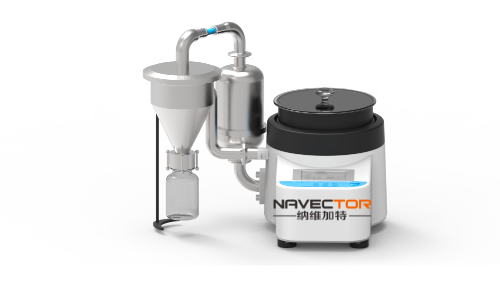
I. What is the working principle of this machine?
The core of this machine lies in its dual driving force: negative pressure + airflow. When the material is poured into the screening chamber, the connected vacuum cleaner instantly creates a negative pressure environment, attracting fine powder toward the screen like a magnet. At the same time, the air nozzle at the top releases adjustable airflow, precisely breaking up agglomerates between starch particles (especially the “small bun”-shaped clumps formed after moisture absorption).
In Ms. Li’s case, starch clumps that originally required 30 minutes of manual tapping to disperse were broken into individual particles within 5 seconds under airflow impact. More importantly, this screening process relies entirely on airflow dynamics, without mechanical stirring components, avoiding the risk of starch particle denaturation caused by external friction.
II. Why can it solve the agglomeration problem?
The biggest challenge of materials like starch lies in “low density + strong static electricity”—they easily disperse when dry but readily form clumps when moist. Traditional vibrating screens rely on high-frequency vibration, which actually exacerbates electrostatic adsorption between starch particles.
The small negative pressure airflow sieve addresses this challenge through a “triple protection mechanism”:
Airflow buffer layer: High-speed airflow forms a dynamic air film above the screen, preventing fine powder from directly impacting the screen surface and generating static electricity;
Pressure gradient screening: The negative pressure difference allows materials to move downward naturally rather than through passive vibration, reducing collision frequency between particles;
Graded airflow regulation: The air pressure intensity of the nozzle can be adjusted according to different mesh sizes, ensuring large particle interception while maintaining fine powder throughput.
Ms. Li found that when screening 100-mesh starch, the airflow sieve could process 8 kg per hour, while the old vibrating screen, once clogged, required two hours to complete the same volume.
III. Who needs this equipment the most?
Typical users are often technicians in food R&D laboratories and quality inspection departments. They face three key demands:
Timeliness: Rapid acquisition of particle size distribution data during new product development;
Stability: Equipment must adapt to raw materials with fluctuating quality and varying moisture content;
Cleanliness: Laboratory environments require low noise and no contamination.
For example, a baking ingredient supplier used this equipment in the development of new wheat starch products, successfully reducing screening time from 2 hours to 20 minutes, while improving particle uniformity by 40%. The built-in sealed operation chamber also prevents dust leakage, meeting GMP workshop standards.
IV. In which production stages is it used?
From raw material inspection and intermediate product testing to final inspection before packaging, it is widely applied:
Raw material pretreatment: Quickly removes impurities in corn starch (such as uncrushed germ);
Process control: Monitors particle size changes during potato starch gelatinization;
Quality traceability: Analyzes particle size distribution of finished starch to build a quality database.
A baby food manufacturer optimized its process by adding an airflow sieve before mixing starch and rice flour, ensuring particle size deviation within ±5 μm, thereby maintaining consistent product texture.
V. Under what conditions is it more effective than traditional screens?
This equipment performs particularly well in three special scenarios:
1.High humidity environments: When relative humidity exceeds 65%, traditional screening efficiency drops by 50%, while the airflow sieve maintains stable performance through adjustable negative pressure;
2.Ultra-fine powder processing: Achieves a screening pass rate of up to 98.7% for 80–200 mesh starch, far exceeding the 85% level of conventional screens;
3.Continuous operation: Supports 24-hour uninterrupted operation, with an automatic screen cleaning system that back-blows every 10 minutes, eliminating the need for frequent manual cleaning.
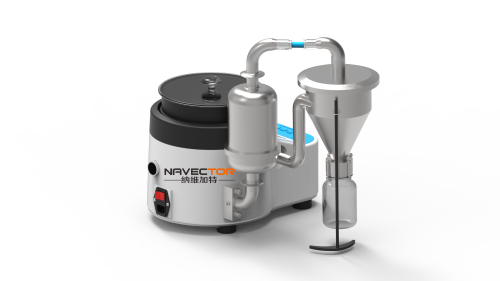
During the rainy season in southern regions, a starch processing plant used the airflow sieve combined with a humidity monitoring system to achieve continuous screening of starch with 12%–15% moisture content.
VI. How to choose the right model for your material?
Three key factors should be considered during selection:
Material characteristics: The hygroscopic nature of starch requires equipment with quick screen replacement and moisture-proof sealing design;
Capacity requirements: Laboratory-level equipment typically handles 10–50 kg per day, while industrial models can reach up to 200 kg per hour;
Space limitations: Food workshops often require compact designs; this equipment adopts a vertical structure, occupying only one-third of the space of conventional screens.
It is recommended to conduct free material testing to determine key parameters. For example, adjusting the airflow injection angle can improve screening efficiency by 15%–20%, while changing the screen inclination can enhance the discharge rate of coarse particles.
Contact now: 15601937055
Click to get free sample testing services and break through your starch screening efficiency bottleneck!
 English
 中文
中文 Español
 ภาษาไทย
 Pусский
 Bahasa Indonesia
 Tiếng Việt