In high-end manufacturing fields such as additive manufacturing and powder metallurgy, spherical metal powders are often referred to as the “grain of industry.” However, for a long time, the production of high-quality spherical powders, especially for non-ferrous metals and their alloys such as tin, zinc, magnesium, and aluminum, has faced multiple challenges related to efficiency, cost, and flexibility. Although traditional gas atomization technology can produce high-quality powders, its large-scale equipment, stringent raw material requirements, and high startup costs have discouraged many research institutions and small-to-medium-sized enterprises.
Today, a technology known as “Crucible Melting Ultrasonic Atomization” is quietly changing this situation. How can it transform solid metal into precision spherical powder particles within just one hour? This article provides an in-depth analysis of its technical principles and, through practical case studies, reveals how this technology has become a breakthrough solution for new material development and high-end powder production.
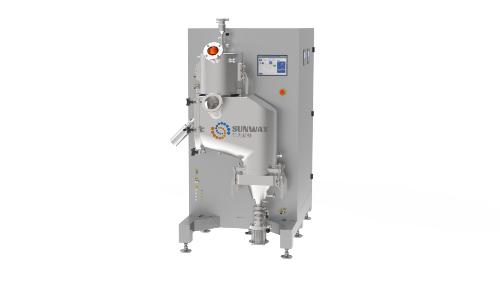
I. Technical Core: From “Humidifier” to “Powder Production Machine”
The basic principle of ultrasonic atomization is not unfamiliar. It is similar to the air humidifiers used in daily life, where high-frequency vibrations break liquid into tiny droplets. However, when the medium changes from room-temperature water to molten metal at temperatures exceeding one thousand degrees Celsius, the challenge becomes far greater.
Technical Process:
Induction Melting:
Metal raw materials (blocks, granules, pure elements, etc.) are placed in a specially designed crucible and rapidly heated to a molten state through an induction coil. This process can be conducted under vacuum or inert gas protection to effectively prevent oxidation and elemental loss.
Ultrasonic Atomization:
The molten metal is precisely guided onto a thin metal strip (vibrating plate) connected to an ultrasonic transducer. The transducer drives the vibrating plate at high frequencies such as 20 kHz, 40 kHz, or 60 kHz, allowing the molten metal to spread evenly into a thin liquid film.
Powder Formation:
When the vibration energy reaches a critical threshold, the liquid film breaks apart and ejects countless micron-sized droplets. These droplets travel through the atomization chamber in a parabolic trajectory and rapidly cool and solidify, ultimately forming metal powders with high sphericity and uniform particle size distribution.
Practical Recommendation:
For researchers, understanding the coordinated control of frequency and flow rate is key. Higher ultrasonic frequencies generally help produce finer powders, while the flow rate of molten metal directly affects atomization stability and particle size distribution. During process development, small-scale experiments should be conducted to identify the optimal frequency-flow parameter combination for specific materials.
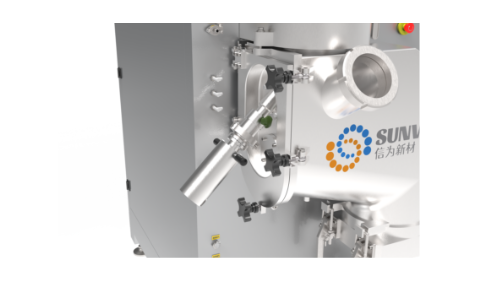
II. Comparison with Traditional Technologies: A Dual Revolution in Efficiency and Flexibility
To better illustrate the advantages of ultrasonic atomization technology, the following comparison is made with the conventional mainstream technology—Electrode Induction Gas Atomization (EIGA).
|
Comparison Dimension |
Traditional Electrode Induction Gas Atomization (EIGA) |
Crucible Melting Ultrasonic Atomization (Using Sunway New Material’s Crucible Melting Ultrasonic Atomization Powder Machine as an Example) |
|
Raw Material Requirements |
Pre-alloyed rods are mandatory, requiring additional wire or rod preparation processes. |
No special requirements; blocks, granules, pure elements, and master alloys can all be fed directly. |
|
Minimum Batch Size |
Typically starts from tens of kilograms, resulting in significant material waste. |
Can be as low as 100 grams, perfectly suited for R&D and small-batch production. |
|
Composition Control |
Rod composition is fixed; adjusting formulations requires remelting and rod production, leading to long development cycles. |
Flexible proportioning within the crucible enables rapid alloy development and precise composition control. |
|
Equipment Deployment |
Large-scale equipment requiring complex auxiliary systems (such as rod feeding and high-pressure gas supply), occupying considerable floor space. |
Compact structure occupying only a few square meters, with low infrastructure requirements. |
|
Typical Production Cycle |
Multiple processing steps from raw material to powder, resulting in long production cycles. |
Integrated process capable of converting alloy to powder in as little as one hour. |
Insights and Perspectives:
Traditional gas atomization technology resembles “heavy industry,” focusing on scale and stability, making it suitable for large-scale standardized production. In contrast, ultrasonic atomization technology is more like a “precision laboratory,” removing restrictions on raw material forms and returning control of powder production to researchers and flexible manufacturers.
This is not merely a technological replacement but the creation of an entirely new application scenario—rapid validation, customized development, and on-demand production. For innovative enterprises such as Sunway New Material, identifying and serving this specialized demand is key to achieving differentiated competition and supporting national new-material development strategies.
III. Practical Cases: How Does the Technology Solve Real Challenges?
Case 1: Additive Manufacturing – Medical-Grade Aluminum Alloy Powder Production
Company:A medical device manufacturer.
Requirement:Production of AlSi10Mg aluminum alloy powder with high sphericity and low oxygen pickup for 3D-printed orthopedic implants. The powder must exhibit excellent flowability and a narrow particle size distribution (15–53 μm) to ensure component density and surface quality.
Solution:An ultrasonic atomization powder production machine was used under argon protection with a 60 kHz ultrasonic frequency. Oxygen increase was controlled below 50 ppm, while powder particle size distribution was regulated by adjusting guide flow speed and ultrasonic power.
Results:Powder sphericity reached ≥0.93, D50 was approximately 45 μm, and flowability was excellent. The powder was successfully applied in the SLM process, with printed parts meeting medical implant standards.
Key Takeaway:Ultrasonic atomization technology enables highly consistent and customized small-batch powder production, making it particularly suitable for high-end applications such as medical additive manufacturing.
Case 2: A High-End 3D Printing Service Provider – Achieving “Customized Powder Freedom”
Background:The company handled multiple varieties of low-volume metal printing orders. Purchasing commercial powders was costly, and fixed particle size distributions limited process optimization.
Solution:The company purchased Sunway New Material’s Crucible Melting Ultrasonic Atomization Powder Machine and established its own small-batch powder production line.
Practical Results:
Flexible Production:Particle size distribution can be adjusted according to customer requirements and printer specifications. For example, finer powders can be produced for intricate structures.
Reduced Dependency:The company directly purchases Al-Si-Mg master alloy blocks for melting and atomization, eliminating reliance on expensive pre-alloyed powder suppliers.
Cost Reduction and Efficiency Improvement:
Overall powder costs decreased by 30%, while customized powders improved print yield and component performance.
Key Takeaway:Internalizing critical supply chain processes while maintaining flexible customization capabilities is an effective strategy for high-end manufacturing service providers to establish competitive advantages.
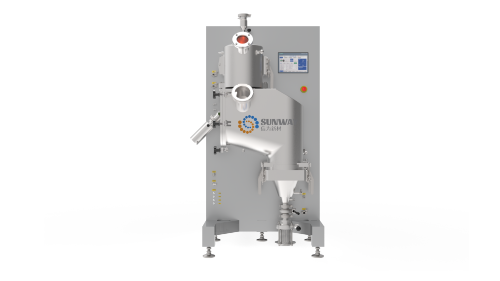
IV. Future Outlook: Where Are the Boundaries of Ultrasonic Atomization Technology?
Currently, equipment represented by Sunway New Material’s Crucible Melting Ultrasonic Atomization Powder Machine can stably process non-ferrous metals and alloys with melting points up to 1300°C, including tin, zinc, magnesium, aluminum, lead, and their multi-component alloy systems. Its applications are rapidly expanding from laboratory research into high-end small-batch production environments.
|
Melting Method |
Induction Melting |
|
Maximum Heating Temperature |
1300°C |
|
Applicable Materials |
Metals with melting points around 1300°C and relatively low, volatile materials that readily evaporate in plasma environments, such as Sn, Zn, Mg, Pb, and Al |
|
Raw Material Forms |
Crushed form, sponge form, fiber form, atomized liquid form |
|
Powder Particle Size |
10–180 μm (adjustable) |
|
Application Fields |
Powder Metallurgy, Additive Manufacturing |
|
Sphericity |
≥95% |
|
Powder Yield |
≥95% |
|
Induction Heating Power Supply |
20 kW / 40 kW |
|
Ultrasonic Frequency |
20 / 40 / 60 kHz |
Potential Future Development Directions:
Expansion of Material Systems:
With advances in vibrating plate materials and cooling technologies, processing higher-melting-point alloys such as certain copper alloys and titanium alloys may become feasible.
Process Intelligence:
Integration of online monitoring and AI control systems could enable real-time feedback and closed-loop regulation of powder particle size and sphericity, creating highly automated intelligent powder production units.
Industrial Ecosystem Integration:
Linking material design software with additive manufacturing process databases could establish integrated digital solutions covering “material design – powder production – component manufacturing.”
Ultrasonic atomization powder production technology is opening a new pathway for non-ferrous metal powder manufacturing through its unique flexibility and cost-effectiveness. It frees new material development from dependence on large-scale equipment and lengthy production cycles while giving small and medium-sized high-end manufacturers greater autonomy in powder customization.
The practices of companies such as Sunway New Material demonstrate that China’s high-end equipment innovation is progressing from “following” to “running alongside” and even “leading” global developments. By solving specific industrial challenges, these innovations are providing strong technological momentum for manufacturing transformation and upgrading. As the technology continues to mature and its applications expand, this powder manufacturing revolution driven by ultrasonic technology is expected to have an even greater impact on the future of advanced manufacturing.


 English
 中文
中文 Español
 ภาษาไทย
 Pусский
 Bahasa Indonesia
 Tiếng Việt