In advanced manufacturing fields such as additive manufacturing, powder metallurgy, and medical devices, spherical metal powders are important fundamental materials. Their sphericity, particle size distribution, and flowability often directly affect the performance and quality of final products. With the continuous acceleration of new material development, the demand for metal powders in the market is also changing. In the past, the industry focused more on large-scale, standardized production. Today, more and more research institutions and innovative companies are focusing on the rapid preparation of high-quality, small-batch, and customizable powders to meet the needs of material development and process validation.
Under this trend, metal powder production technologies are continuously evolving. From mechanical crushing and water atomization to gas atomization, and then to ultrasonic atomization technology, which has attracted widespread attention in recent years, the industry is constantly moving toward higher quality, higher efficiency, and more flexible production models. Among them, ultrasonic atomization powder production machines, with advantages such as small-batch powder production, rapid validation, and high-quality powder preparation, are becoming important equipment in the field of new material development.
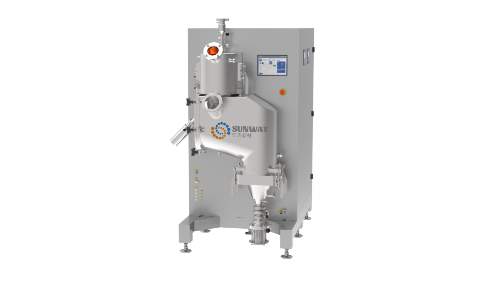
I. From Gas Atomization to Ultrasonic Atomization: Why Is Metal Powder Production Entering the “Small-Batch Era”?
For a long time, gas atomization has been the mainstream process for producing spherical metal powders and is widely used in fields such as additive manufacturing and powder metallurgy. It can meet the needs of large-scale production of standardized powders. However, with the accelerating pace of new material development, more and more companies are focusing on new alloy validation, small-batch trials, and process development. Traditional powder production methods are gradually showing limitations in terms of production volume, R&D costs, and flexibility.
Against this background, ultrasonic atomization technology has gained increasing attention. Unlike traditional gas atomization, which relies on high-speed airflow to break up molten metal, ultrasonic atomization uses high-frequency vibration to directly act on liquid metal to achieve atomization and powder formation. Taking Sunway New Materials’ ultrasonic atomization powder production machine as an example, it is suitable for non-ferrous metals and alloy materials such as tin (Sn), zinc (Zn), magnesium (Mg), aluminum (Al), and lead (Pb), with melting points below approximately 1300°C, providing a new solution for small-batch spherical metal powder production.
|
Comparison Item |
Traditional Gas Atomization |
Ultrasonic Atomization (Taking Sunway New Materials’ Ultrasonic Atomization Powder Production Machine as an Example) |
|
Application Stage |
Large-scale mass production |
Material development, process validation, pilot production |
|
Minimum Production Batch |
Usually kilogram level or above |
Starting from hundreds of grams |
|
Powder Sphericity |
High |
≥95% |
|
Powder Yield |
High |
≥95% |
|
Energy Consumption Level |
Higher |
Can be reduced by more than 90% |
|
Typical Application Scenarios |
Large-volume powder supply |
New material development, 3D printing trials, customized production |
It can be seen that with the continuous growth of material innovation and flexible manufacturing demands, metal powder production technology is gradually shifting from simply pursuing large-scale production toward “small-batch, high-quality, and rapid validation.” Ultrasonic atomization technology is an important representative of this trend.
II. How Does an Ultrasonic Atomization Powder Production Machine Turn Metal into Spherical Powder?
The core of an ultrasonic atomization powder production machine lies in using ultrasonic vibration energy to achieve stable atomization of liquid metal. After the metal raw material is melted, the molten material is evenly guided to the ultrasonic atomization tip, where it gradually spreads into a liquid film under high-frequency vibration at 20kHz to 60kHz. As the vibration energy continues to increase, the wave peaks on the surface of the liquid film continue to grow and eventually overcome the surface tension limit, breaking into a large number of micron-sized droplets. At the same time, the cavitation effect generated by ultrasonic waves further promotes the dispersion of liquid metal, making the droplet size more uniform.
These droplets rapidly cool and solidify in a high-purity argon or nitrogen protective atmosphere, forming spherical metal powders. They are then collected and classified through cyclone separation and screening systems. Since the entire process is carried out in a closed environment, it not only helps control oxygen content but also enables the production of powders with higher sphericity and narrower particle size distribution.
Compared with traditional gas atomization, ultrasonic atomization does not rely on high-pressure airflow. Instead, it directly applies ultrasonic vibration to the molten metal, providing significant advantages in energy control, small-batch production, and equipment compactness.
III. Why Is Ultrasonic Atomization More Suitable for Small-Batch Spherical Metal Powder Production?
For new material development, what is truly scarce is often not production capacity, but validation efficiency. From design to finalization, a new alloy system usually requires multiple rounds of formulation adjustments and performance testing. If large-scale powder production is required for every experiment, not only will R&D costs increase, but the product development cycle will also be extended.
The advantage of ultrasonic atomization technology lies in its ability to complete small-batch powder production validation with a lower threshold. Since it has relatively low requirements for raw material forms, materials in block, granular, sponge, and some recycled metal forms can be directly used for melting and atomization. Researchers do not need to prepare complex pre-alloyed raw materials in advance, allowing more flexible material design and process exploration.
Meanwhile, ultrasonic atomization is particularly suitable for small-batch production scenarios. While meeting R&D validation requirements, it effectively reduces material consumption and trial-and-error costs. Currently, some domestic ultrasonic atomization equipment can achieve powder production starting from hundreds of grams. While reducing development costs, it can still produce high-quality powders with sphericity above 95% and yield above 95%. Taking Sunway New Materials’ ultrasonic atomization powder production machine as an example, it enables integrated production from melting to powder collection, providing research institutions and enterprises with a more flexible and efficient solution for spherical metal powder preparation.
IV. What Practical Problems Is Ultrasonic Atomization Technology Solving?
In recent years, more and more companies have begun to establish their own powder development capabilities. A high-end 3D printing service company once relied on externally purchased metal powders for a long time. Not only was the procurement cost high, but the powder specifications were also fixed, making it difficult to optimize according to different part structures and printing processes.
After establishing an in-house powder production platform, the company began using ultrasonic atomization technology for small-batch powder development. Engineers could flexibly adjust material compositions and particle size distributions according to project requirements, and complete powder preparation and printing validation within a short period of time. Compared with the previous method of waiting for suppliers to provide powders, the development cycle of new materials was significantly shortened, and powder procurement costs were effectively controlled.
For many companies engaged in new material development, the value of ultrasonic atomization technology lies not only in powder production itself, but also in its ability to help companies establish independent R&D capabilities, shorten innovation cycles, and improve product iteration efficiency.
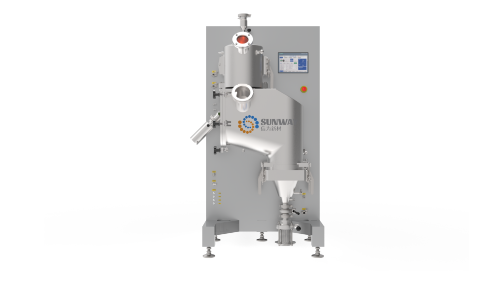
V. Where Will Metal Powder Production Develop in the Future?
With the development of advanced manufacturing industries, the demand for metal powders is gradually shifting from simply pursuing output volume toward higher quality, higher efficiency, and stronger flexibility. Especially in additive manufacturing, new energy materials, and high-performance alloy fields, small-batch, multi-variety, and customized powder production will become an important development trend.
At the same time, intelligent technologies are accelerating their integration into powder production equipment. In the future, key indicators such as particle size distribution, sphericity, and oxygen content are expected to achieve online monitoring and automatic adjustment, driving metal powder production from experience-driven processes toward data-driven processes, and further improving R&D and production efficiency.
From an industry development perspective, ultrasonic atomization and gas atomization are not substitutes for each other, but technologies with different focuses. The former is more suitable for R&D validation, small-batch production, and customized requirements, while the latter will continue to serve large-scale industrial production. In the future, these two technology routes will develop collaboratively and jointly promote the advancement of metal powder manufacturing.
VI. The Key to Technology Implementation: Equipment Capability and Process Experience Are Both Essential
Ultrasonic atomization powder production depends not only on equipment performance but also on long-term accumulated process experience. Since different metal materials vary in melting point, fluidity, surface tension, and other characteristics, optimization of atomization parameters often requires extensive experimental data and project experience.
As a company specializing in the R&D of ultrasonic atomization powder production technology, Sunway New Materials has established a research team covering materials, mechanical engineering, automation, and other fields, and has built a process database covering various metal and alloy systems. Currently, the company has developed a complete equipment system covering melting, atomization, and classification collection. Related equipment has been applied in fields such as 3D printing, powder metallurgy, and medical applications.
From gas atomization to ultrasonic atomization, the change is not only in the powder production process, but also reflects the transformation of metal powder manufacturing toward greater flexibility and efficiency. With the continuous growth of new material development and customized demands, the importance of small-batch spherical metal powder production will continue to increase.
With advantages such as high sphericity, low oxygen increase, high yield, and flexible small-batch production capability, ultrasonic atomization powder production machines are providing new choices for research institutions, new material companies, and advanced manufacturing enterprises. In the future, as the technology continues to mature and application scenarios continue to expand, ultrasonic atomization technology is expected to play an increasingly important role in the field of metal powder production.


 English
 中文
中文 Español
 ภาษาไทย
 Pусский
 Bahasa Indonesia
 Tiếng Việt