In the production and quality control process of ceramic glaze materials, powder particle size distribution directly affects processing performance and product stability. For fine ceramic glaze powder, the challenge of screening is not only achieving particle separation, but also preventing agglomeration during the screening process and ensuring the accuracy of particle size analysis results.
Due to the characteristics of fine particle size and low density, ceramic glaze powder particles are prone to forming agglomerates caused by electrostatic adsorption and interparticle interactions. These agglomerates can adhere to the screen mesh, resulting in screen clogging and reduced screening efficiency. Therefore, improving the dispersion state of fine powder on the screen surface has become a key factor in enhancing screening performance.
The negative pressure airflow sieve uses aerodynamic assistance for screening. Through airflow action, it promotes particle dispersion, reduces adhesion and agglomeration, and achieves more stable and repeatable fine screening results, providing a new solution for difficult-to-screen fine powders such as ceramic glaze powder.
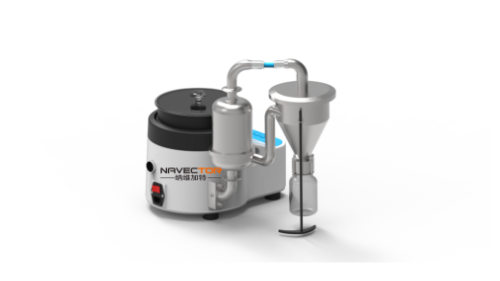
I. What Is the Working Principle of This Equipment?
The small negative pressure airflow sieve mainly uses aerodynamic assistance to complete powder screening. During operation, the screening unit is connected to a vacuum cleaner, creating a negative pressure environment inside the screening chamber. Airflow passes through the nozzles and acts on the screen surface, causing the materials entering the chamber to move under the airflow force and achieve screening classification according to particle size differences.
Unlike traditional mechanical vibrating screens, the small negative pressure airflow sieve does not rely on vibration force to drive materials through the screen. Instead, it uses airflow to move the materials, allowing fine particles to pass through the screen openings more easily, while larger particles remain above the screen surface.
This screening method is suitable for difficult-to-screen materials with low density and a tendency to agglomerate. By adjusting screening parameters, it can meet the analysis requirements of different samples and improve the stability of the screening process.
II. Why Can It Solve the Agglomeration Problem?
During the screening process, fine powders are prone to agglomeration due to their small particle size, low mass, and interparticle forces. This makes it difficult to accurately reflect the actual particle size distribution and increases the risk of screen blockage.
The negative pressure airflow sieve improves the powder dispersion state through aerodynamic assistance. The airflow acts on the screen surface, promoting the dispersion of agglomerated particles, reducing particle adhesion, and allowing fine particles to fully contact the screen mesh for separation. At the same time, continuous airflow helps reduce powder accumulation on the screen surface and minimizes screen clogging.
III. Who Needs This Equipment Most?
The small negative pressure airflow sieve is mainly suitable for fine powders with low density, high agglomeration tendency, and high requirements for screening repeatability. It can be widely used in ceramics, pharmaceutical materials, chemicals, plastics, rubber, minerals, powder coating, pigments, toners, food, and other industries.
Fine particle materials such as ceramic glaze powder and chemical powders often have poor flowability due to their lightweight characteristics, making them prone to agglomeration and screen adhesion during screening. Traditional screening methods may have difficulty achieving stable results. The small negative pressure airflow sieve improves the powder screening condition through aerodynamic assistance, making it more suitable for particle size analysis of lightweight and easily adhesive fine powders.
For powders that are lightweight, prone to agglomeration, and likely to cause screen blockage, selecting a screening method that matches the material characteristics is more important than simply increasing screening intensity.
IV. In Which Production Processes Can It Be Used?
In ceramic glaze production, the negative pressure airflow sieve is mainly applied in powder pretreatment, screening before batching, and quality inspection processes.
During raw material processing, the equipment can be used to screen glaze powder after grinding, control powder particle size, reduce oversized particles entering subsequent processes, and improve the powder screening condition.
During formulation preparation, controlling the particle size distribution of glaze powder through screening can provide a more stable raw material foundation for subsequent batching, slurry preparation, and glazing processes, reducing process fluctuations caused by differences in powder characteristics.
In addition, during research and quality inspection processes, the negative pressure airflow sieve can be used for small-batch material screening. It helps analyze particle size variations between different powder batches and provides references for formulation optimization and quality control.
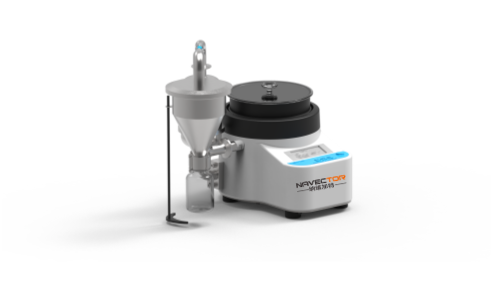
V. Under What Conditions Does It Perform Better Than Traditional Screens?
For conventional particle materials with good flowability, traditional screening methods can usually meet basic classification requirements. However, when materials have characteristics such as fine particle size, low density, easy agglomeration, and electrostatic generation, the screening process is more likely to be affected by material properties.
For example, fine materials such as ceramic glaze powder, certain chemical powders, plastic powders, pigments, and toners are prone to uneven dispersion and screen adhesion during screening. This can lead to fluctuations in screening results and affect particle size analysis and quality control.
Compared with conventional granular materials, these powders require greater attention to dispersion and repeatability during screening. With its adaptability to fine powders, the small negative pressure airflow sieve is suitable for laboratory analysis, small-batch testing, and applications requiring high screening stability.
VI. How to Select the Right Model for Your Material?
The selection of a negative pressure airflow sieve needs to consider material characteristics, screening objectives, and actual application conditions.
For fine powder materials, the first factors to consider are particle size range, flowability, dry or wet condition, and whether the material is prone to agglomeration or static electricity. These factors will affect the selection of screen specifications and the stability of the screening process.
Secondly, the screening purpose needs to be clearly defined, including target particle size, screening accuracy, sample quantity, and application scenario. Different screening requirements will involve different screen mesh sizes, operating parameters, and equipment configurations.
In addition, actual operating conditions are also important factors in equipment selection. Factors such as equipment connection methods, air supply or dust collection configurations, and operating environment can all influence the actual performance of the equipment.
Through actual material testing, suitable screen specifications and screening parameters can be further determined, ensuring that the equipment configuration better matches specific application requirements.
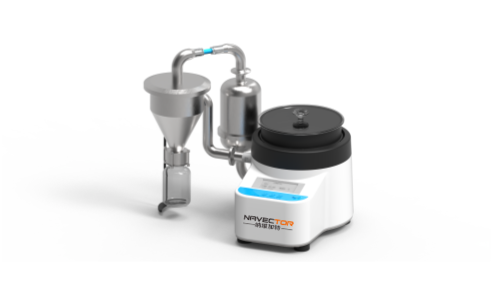
For fine powders, screening is not only a process of particle classification but also an important step in accurately understanding material characteristics and ensuring product quality. Reliable particle size data can provide a basis for formulation adjustment, process optimization, and production control.
The negative pressure airflow sieve provides a more suitable solution for common challenges encountered during fine powder screening, making particle size analysis more stable and efficient. As powder materials continue to develop toward higher precision and refinement, selecting screening technologies that match material characteristics has become a key factor in improving product consistency and process stability.
 English
 中文
中文 Español
 ภาษาไทย
 Pусский
 Bahasa Indonesia
 Tiếng Việt