With the rapid development of new energy industries such as lithium batteries and solid-state batteries, powder material production has placed higher demands on screening efficiency and continuous operation capabilities. For micron-level ultrafine powders, the small particle size and tendency to agglomerate can easily cause electrostatic adsorption and mesh clogging during the screening process, reducing the effective working time of the screen and decreasing material passing efficiency, thereby limiting the overall capacity of the equipment.
The key to improving the screening capacity of ultrafine powders lies in optimizing the movement state of materials on the screen surface and improving screen utilization efficiency. The high-speed sieve optimizes the vibration mode, allowing materials to disperse rapidly and increasing the contact opportunities between fine particles and the screen mesh, thereby improving screening speed and processing capacity per unit time. This article will focus on the working principle and capacity improvement advantages of the high-speed sieve, exploring how it helps enterprises overcome efficiency bottlenecks in the screening process.
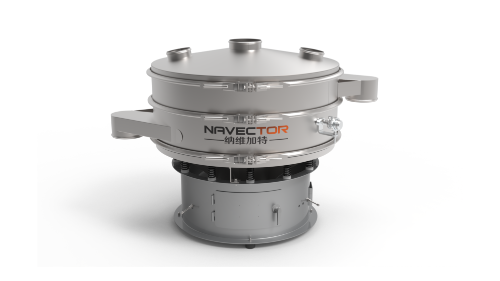
I. Why Do Traditional Screening Equipment Struggle to Meet the High-Capacity Requirements of Ultrafine Powders?
For conventional particle materials, screening mainly relies on differences in particle size and achieves classification through vibration forces. However, when materials enter the micron or finer range, the difficulty of screening increases significantly. As particle size decreases, the influence of surface forces on material movement becomes stronger. Ultrafine powders are easily affected by electrostatic forces, inter-particle adhesion, and agglomeration, resulting in reduced flowability and difficulty maintaining uniform dispersion on the screen surface.
Taking lithium battery materials as an example, powders such as graphite and conductive agents usually have large specific surface areas, making particles more likely to attract each other and form agglomerates. If materials cannot be fully dispersed, the contact opportunities between fine particles and the screen mesh decrease, resulting in reduced screening efficiency.
Similar problems also exist in fields such as metal powders and new materials. Some fine powders tend to adhere to the screen surface during screening, reducing screen opening utilization and limiting the continuous operation capability of the equipment.
II. How Does the High-Speed Sieve Break Through the Capacity Bottleneck of Ultrafine Powder Screening?
The high-speed sieve adopts a low-frequency high-speed vibration mode. By optimizing the movement state of materials on the screen surface, it increases the effective contact opportunities between fine particles and screen openings, improving problems such as mesh clogging and insufficient classification. During operation, materials continuously move across the screen surface, allowing particles that meet the required particle size to quickly pass through the mesh, improving screen utilization efficiency. Meanwhile, the 0–3000 rpm stepless speed adjustment system can adjust screening parameters according to different material characteristics, enhancing equipment adaptability.
The key to the capacity improvement of the high-speed sieve is not simply increasing vibration speed, but achieving higher screening efficiency by improving screen utilization and processing capacity per unit area. Based on material characteristics and process conditions, Navector’s high-speed intelligent screening machine can increase capacity by up to 5 times compared with ordinary screening machines and up to 3 times compared with traditional small-particle screening equipment.
In continuous production processes for lithium battery materials, new materials, and other industries, screening capacity affects the connection between upstream and downstream processes. Increasing the processing volume per unit time helps reduce restrictions caused by the screening stage on overall production efficiency.
III. What Are the Performance Differences Between High-Speed Sieves and Traditional Screening Equipment?
The high-speed sieve is mainly designed for ultrafine powders and high-capacity screening requirements. By improving effective screening capacity per unit time, it meets the requirements of continuous production for processing capacity and operational stability.
|
Comparison Item |
Conventional Screening Equipment |
Navector High-Speed Sieve |
|
Screening Characteristics |
Meets basic particle size separation requirements |
Uses low-frequency high-speed vibration to improve material movement, enhancing fine particle passing efficiency |
|
Capacity Performance |
Meets conventional production processing requirements |
Based on material characteristics and process conditions, capacity can be increased up to 5 times compared with ordinary screening machines and 3 times compared with traditional small-particle screening equipment |
|
Application Scenarios |
Conventional powder production and basic classification processes |
Ultrafine powder production scenarios such as solid-state batteries, lithium batteries, new materials, electronic materials, and fine chemicals |
It should be noted that the selection of screening equipment needs to be based on material characteristics, particle size requirements, and production objectives. For conventional powder screening, traditional equipment still has good applicability. However, for applications involving ultrafine powders, high-capacity production, and continuous operation, the high-speed sieve can provide more stable screening performance.
IV. Which Production Scenarios Are More Suitable for High-Speed Sieves?
High-speed sieves are mainly used in industries requiring precision screening of ultrafine powders and small-particle materials, as well as continuous production capabilities, including solid-state batteries, lithium batteries, new materials, electronic materials, and fine chemicals.
In the lithium battery material field, powders such as sulfide electrolytes, high-nickel single-crystal materials, single-crystal small-particle lithium iron phosphate, and conductive agents usually require strict control of particle size distribution. As material particle sizes continue to decrease, screening processes are increasingly affected by agglomeration and insufficient dispersion. The high-speed sieve improves material movement conditions and enhances fine particle passing efficiency, meeting high-precision and high-capacity production requirements.
In the fields of new materials, electronic materials, and fine chemicals, some ultrafine powders also face requirements for screening efficiency and continuous production capability. The high-speed sieve can meet the precise classification requirements of fine particle materials and help maintain stable production processes.
From the perspective of application, the high-speed sieve is not designed for a specific material, but rather for the demand for efficient and stable screening of ultrafine powders, providing precision screening solutions for industries such as solid-state batteries, lithium batteries, and new materials.
V. Looking Ahead, How Will Ultrafine Powders Develop in the Future?
The lithium battery, new material, and electronic material industries are continuously increasing requirements for powder performance. Ultrafine powder screening will develop toward higher precision, higher efficiency, and intelligent operation. In the future, screening equipment will not only need to meet particle size control requirements but also adapt to the processing capacity and operational stability requirements of continuous and large-scale production.
To address challenges such as ultrafine powder agglomeration, screening technology will pay more attention to optimizing material movement conditions and controlling the screening process. For powder manufacturers, efficient and stable screening equipment will become an important part of ensuring product consistency and improving production efficiency. High-speed sieves will also create greater value in fields such as solid-state batteries, lithium batteries, and new materials.
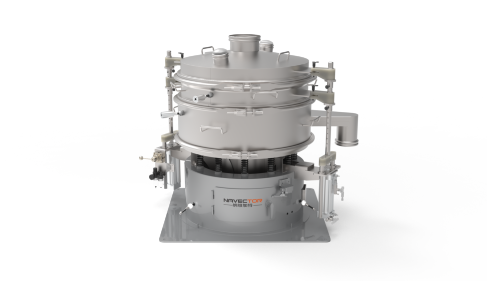
VI. Frequently Asked Questions About High-Speed Sieves
1. What materials are high-speed sieves mainly used for?
High-speed sieves are mainly used for precision screening and classification of ultrafine powders and small-particle materials. They are suitable for industries such as solid-state batteries, lithium batteries, new materials, electronic materials, and fine chemicals.
2. Why can high-speed sieves improve screening capacity?
The high-speed sieve improves the movement state of materials on the screen surface through low-frequency high-speed vibration, increasing the contact efficiency between fine particles and the screen mesh, thereby improving screen utilization and processing capacity per unit time.
3. What factors should be considered when selecting a high-speed sieve?
Equipment selection should consider material particle size, processing capacity, flowability, agglomeration tendency, electrostatic characteristics, and production process requirements to ensure screening efficiency and stable equipment operation.
The application of high-speed sieves is essentially an optimization of the screening approach for ultrafine powders. It does not simply increase vibration speed but improves material movement conditions, allowing the screen mesh to perform more effectively and increasing the actual screening capacity per unit time, reducing the pressure on enterprises to expand capacity by adding more equipment.
For lithium battery materials, new materials, and fine powder industries, production efficiency improvement depends not only on equipment scale but also on the operational efficiency of each process stage. When the screening process achieves better material dispersion and more efficient particle classification, powder manufacturing can further advance toward continuous and precision production. The changes brought by high-speed sieves are not only improvements in screening efficiency but also an important step toward more refined and efficient powder manufacturing.


 English
 中文
中文 Español
 ภาษาไทย
 Pусский
 Bahasa Indonesia
 Tiếng Việt