During the manufacturing process of solar cells, front-side silver paste is an important material for forming electrodes, and its stability directly affects the subsequent screen printing performance. As photovoltaic cells continue to develop toward higher efficiency and greater precision, silver paste production has placed increasing emphasis on particle control, dispersion uniformity, and filtration accuracy.
Although filtration appears to be only one step in the production process, it actually affects whether the paste can enter the subsequent printing process in a stable condition. Faced with problems such as screen clogging and reduced efficiency caused by high solid content and high-viscosity slurry, achieving a balance between filtration accuracy and continuous operation capability has become an important direction for optimizing silver paste processing.
This article analyzes the technical challenges in the silver paste filtration process and discusses how silver paste filters achieve high-precision and highly stable slurry filtration through structural optimization and technological innovation.
I. What Makes High-Concentration Silver Paste Filtration Difficult?
During the manufacturing process of solar cell front-side silver paste, the paste mainly consists of silver powder, organic carriers, and functional additives. It needs to maintain good dispersion and stable printing performance. As solar cell processes become increasingly refined, particle size control and slurry uniformity have become important factors affecting product quality. The filtration process must not only remove larger particles and impurities but also reduce abnormal agglomerated particles in the slurry to ensure stable performance during subsequent printing.
However, silver paste has characteristics of high solid content and high viscosity. A large number of silver particles are dispersed in the organic system, increasing the flow resistance of the slurry. During filtration, the equipment must achieve effective separation of fine particles while maintaining stable processing efficiency, which presents challenges for filtration media performance, equipment structure design, and operational stability.
Traditional filtration methods often encounter problems such as increased filtration resistance, filter material clogging, and frequent cleaning when handling high-concentration and high-viscosity slurries, affecting continuous production stability. Therefore, the core challenge of silver paste filtration is not simply improving filtration accuracy, but achieving a balance between fine filtration, efficient operation, and long-term stable production under high solid content and high-viscosity conditions.
II. Principle Analysis: How Does the Silver Paste Filter Improve High-Concentration Slurry Clogging Issues?
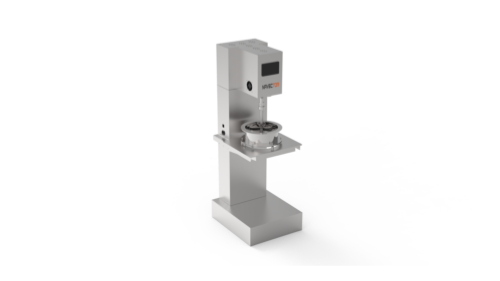
The development of silver paste filters originates from the practical process requirements of solar cell front-side silver paste manufacturers. To address the high solid content, high viscosity, and fine filtration requirements of silver paste, the equipment is optimized based on advanced German high-value, high-viscosity coating filtration technology and combined with an ultrasonic system to achieve fine filtration of high-concentration slurry under atmospheric pressure conditions.
During the filtration process, the slurry material passes through specialized filter mesh sheets for separation. For high-viscosity and high-solid-content slurries, fine particles tend to accumulate on the surface of the filtration medium, gradually reducing the effective filtration area. The silver paste filter applies an ultrasonic system to assist the filtration process, reducing the impact of clogging caused by long-term adhesion of fine particles and maintaining stable filtration performance.
Meanwhile, the equipment adopts an independent integrated filter mesh design, ensuring stable pore size of the filter material, reducing the impact of filter deformation on filtration accuracy during long-term operation, and facilitating thorough cleaning afterward. The scraper operates smoothly, reducing damage to the separation mesh. The transducer adopts an external design and does not directly contact the material, reducing contamination risks while minimizing the impact of temperature variations on equipment operation.
Based on these designs, the silver paste filter can achieve an 800-mesh filtration process in a single operation without repeated filtration, effectively reducing processing cycles and making it more suitable for fine filtration of high-viscosity and high-solid-content slurry materials such as solar cell front-side silver paste.
III. Compared with Traditional Methods, What Technical Upgrades Does the Silver Paste Filter Provide?
Traditional filtration methods mainly rely on filtration media to achieve solid-liquid separation. They are relatively mature when processing conventional materials, but when dealing with high-solid-content and high-viscosity slurry materials such as solar cell front-side silver paste, they are prone to problems including mesh clogging, reduced efficiency, and limitations in continuous production.
To address the specific requirements of silver paste filtration, the silver paste filter improves the clogging issues during high-concentration slurry filtration through technological optimization, achieving effective separation of fine particles. At the same time, the equipment integrates automated operation design, reducing manual intervention and improving production consistency.
Compared with traditional filtration methods, the silver paste filter not only focuses on improving filtration accuracy but also emphasizes operational performance during the continuous processing of high-viscosity slurry, better meeting the filtration requirements of fine slurry materials such as solar cell front-side silver paste.
IV. What Applications Are Suitable for Silver Paste Filters?
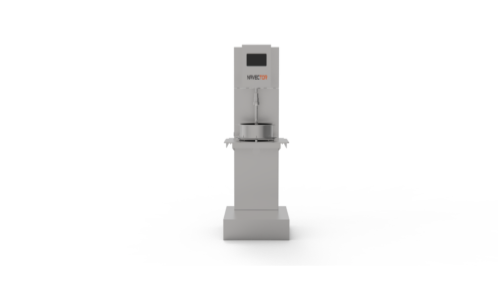
Silver paste filters are mainly used in the filtration process during the manufacturing of solar cell front-side silver paste and are designed to meet the filtration requirements of high-viscosity slurry materials. In photovoltaic cell production, front-side silver paste needs to maintain stable particle distribution and good printing performance. The filtration process is mainly used to control impurities and abnormal particles in the slurry to meet the requirements of subsequent screen printing processes.
V. What Operating Conditions Are Suitable for Silver Paste Filters?
From the perspective of material characteristics, this equipment is suitable for slurry materials with high solid content and high viscosity. It is mainly applied in operating conditions that require strict control of particle size, filtration accuracy, and filtration stability. According to production requirements, corresponding filtration specifications can be selected to meet different fineness requirements.
In practical applications, silver paste filters are more suitable for high-viscosity slurry filtration scenarios, mainly addressing the filtration stability and cleaning maintenance challenges faced by traditional filtration methods when processing such materials. For conventional powder screening or standard low-viscosity liquid filtration, these are not the primary application areas of this equipment.
VI. Future Outlook: Where Will High-Concentration Slurry Filtration Technology Develop?
Photovoltaic cell manufacturing processes are continuously moving toward higher levels of precision. In the future, filtration equipment will not only need to meet basic filtration requirements but also achieve more stable filtration processes and reliable process control based on different slurry characteristics.
In terms of equipment development, high-concentration slurry filtration will continue to move toward automation and intelligent operation. Through automatic control systems, equipment operating conditions can be optimized, manual operations can be reduced, and production stability can be improved.
Meanwhile, as material technologies continue to advance, filtration equipment will place greater emphasis on filtration accuracy, structural reliability, and maintenance convenience to meet the filtration requirements of special slurry materials during production.
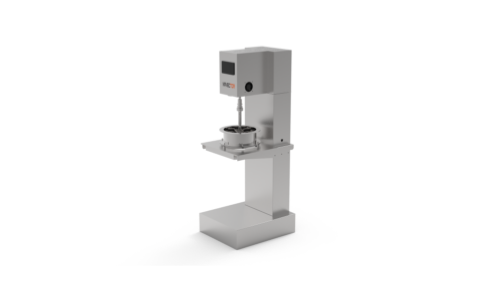
For fine screening and filtration equipment, technological innovation is not simply about expanding application ranges. Instead, it focuses on solving practical problems in specific production processes through structural optimization, process improvement, and technology integration to enhance equipment adaptability.
Navector has long been dedicated to the research and development of fine screening and filtration technologies. Rather than focusing only on standardized equipment manufacturing, the company explores filtration solutions better suited for special material production by combining different material characteristics and process requirements. The true value of technological innovation lies not only in improving equipment performance but also in solving key challenges in production processes.


 English
 中文
中文 Español
 ภาษาไทย
 Pусский
 Bahasa Indonesia
 Tiếng Việt