In the field of metal 3D printing, when people talk about metal powders, they often focus first on indicators such as sphericity, particle size distribution, flowability, and oxygen content. These parameters are directly related to the subsequent performance of the powder. However, people who are truly engaged in material development often pay attention to another issue: whether the equipment can keep up with the pace of testing.
The R&D stage is different from mass production. Formulations need to be adjusted repeatedly, materials may be changed frequently, while a single trial may require only a few hundred grams to several kilograms of powder. In this case, is a powder-making method designed for large-scale production equally suitable for material development? The batch size, raw material adaptability, and powder-making method of the equipment are therefore worth reconsidering. Driven by this demand, ultrasonic atomization powder making machines have become a new option for material development and small-batch powder production.
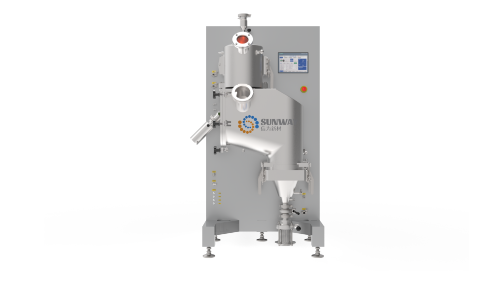
I. First, Look at the Powder-Making Process: How Does an Ultrasonic Atomization Powder Making Machine Turn Metal into Powder?
The basic idea of an ultrasonic atomization powder making machine is to first melt the metal, then use ultrasonic vibration to disperse the molten metal into fine droplets. The droplets cool and solidify in an inert gas to form metal powder. During actual powder production, the raw material is loaded into a crucible. After vacuum extraction and filling with high-purity argon or nitrogen, induction melting is carried out. The melt then flows steadily toward the atomization tip, where droplets are formed under vibration, followed by cooling, collection, and classification.
The overall process may not seem complicated, but the key lies in whether the melting, atomization, and cooling stages can be connected stably. For different materials and powder-making requirements, parameters such as ultrasonic frequency and molten metal flow rate also need to be adjusted accordingly, ultimately affecting the particle size distribution of the powder. In other words, ultrasonic atomization is not simply about “breaking up” molten metal. It requires the molten metal to transition from the melting stage into the atomization stage and then consistently form powder that meets the required specifications.
II. Next, Look at the Application Requirements: Which Scenarios Are More Suitable for Ultrasonic Atomization Powder Making?
Looking at actual R&D projects, ultrasonic atomization powder making is often used for powder production tasks involving relatively small quantities and frequent material changes, particularly in metal 3D printing, new alloy development, and trial production of special metal materials.
Small-Batch Production of Metal 3D Printing Powders
Metal 3D printing requires metal powders with specific properties, while the quantities required during the R&D stage are usually limited. Aluminum alloys, magnesium alloys, copper alloys, and special alloys may all involve small-batch trial production. For projects that require frequent material changes, being able to directly use pure metals, master alloys, or finished alloys for powder production can reduce limitations related to raw material preparation.
New Alloy Development and Formulation Trials
New alloy development often involves multiple rounds of formulation adjustments. Ultrasonic atomization powder making can use pure elements, master alloys, or final alloys as raw materials, with alloying completed during the melting process. This makes it suitable for new material formulation trials and powder performance research.
Production of Active Metal Powders Such as Magnesium Alloys
Active metals such as magnesium alloys have relatively high requirements for the protective atmosphere during powder production. The equipment uses vacuum and high-purity argon or nitrogen protection. The melting, atomization, and cooling processes are all carried out under an inert atmosphere, making it suitable for producing metal powders such as magnesium alloys, aluminum alloys, copper alloys, and special alloys.
Powder Metallurgy and Other Metal Powder Applications
In addition to 3D printing, metal powders produced through ultrasonic atomization can also be used in powder metallurgy, as well as related material research in aerospace, medical, and other fields. For small-batch projects involving special alloy trials, material performance validation, and powder process research, the equipment can serve as the upstream powder-making stage and connect with subsequent processes such as classification and collection.
III. Back to the Powder Itself: What Requirements Do Different Applications Have for Metal Powders?
Different applications do not have exactly the same requirements for metal powders. For 3D printing and new alloy development, in addition to basic powder quality, particle size control, atmosphere requirements for active metals, and the powder quantity required during the R&D stage also need to be considered.
Sphericity affects powder flowability and spreading. The closer the particle shape is to a sphere, the more conducive it is to uniform powder spreading. Therefore, sphericity is one of the important indicators for evaluating metal powder quality.
Particle size and its distribution are related to the actual use of the powder. Different printing processes and material research projects have different requirements for particle size ranges. During powder production, a certain degree of particle size adjustment is required, followed by classification to obtain the target particle size.
For active metals, oxygen content and powder defects also need to be considered. Taking magnesium alloys as an example, oxygen content needs to be controlled during powder production. At the same time, defects such as hollow particles and satellite particles can affect powder quality and may increase the risk of pores and cracking during additive manufacturing.
R&D powder production also needs to match relatively small batch sizes. New alloys typically undergo multiple rounds of formulation trials, with limited powder requirements for each trial. If the equipment can only accommodate large-scale production, material consumption during the R&D stage can easily increase. Therefore, powder production scales ranging from several hundred grams to several kilograms are more suitable for such trial requirements.
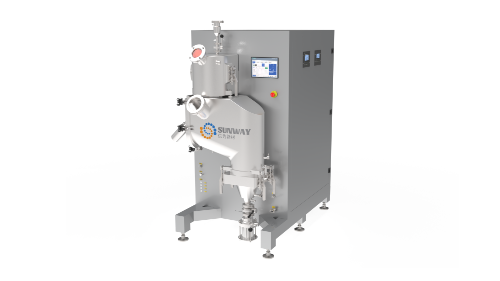
IV. Starting from the Requirements: How Can an Ultrasonic Atomization Powder Making Machine Adapt to R&D Powder Production?
For the production of small-batch, multi-variety, and active metal powders, ultrasonic atomization powder making machines mainly match R&D requirements in terms of the melting method, batch size, raw material form, and atmosphere control.
Melting and atomization are closely connected. After the metal raw materials are loaded into the crucible, an intermediate-frequency induction system completes melting and alloying. The melt then enters the ultrasonic atomization stage, while powder collection is completed through cyclone separation and classification screening at the downstream end.
The batch size is suitable for trial production. The equipment provides two crucible specifications, 0.4 L and 0.8 L, with powder production quantities ranging from 100 g to several kilograms. The appropriate specification can be selected according to the actual requirements of the R&D project, reducing material consumption during small-batch trials.
The raw material form is not limited to rods. Pure elements, master alloys, and final alloys can all be directly used as melting raw materials. Alloy compositions can be prepared inside the crucible, making the equipment suitable for R&D projects that require repeated formulation adjustments.
The powder-making process uses inert gas protection. The equipment first performs vacuum extraction and gas purging, then fills the chamber with high-purity argon or nitrogen. Melting, atomization, and cooling are carried out under a protective atmosphere, making it suitable for producing metal powders with high atmosphere requirements.
In addition, the compact equipment occupies only a few square meters of floor space. Including the infrastructure, it does not require complex large-scale auxiliary facilities, making it convenient to arrange in laboratory and trial-production environments.
V. Back to Actual Projects: What Kind of Requirements Are Worth Considering Ultrasonic Atomization?
Ultrasonic atomization powder making machines are more suitable for R&D trials and small-batch powder production. Repeated alloy formulation adjustments, 3D printing validation, or projects involving active metals such as magnesium alloys are typical application scenarios. At this stage, powder consumption is limited and materials change quickly. The batch flexibility and atmosphere control of the equipment are often more important than simply pursuing production capacity.
Equipment selection should also depend on the stage of the project. If there are many material types, small batch sizes, and frequent formulation iterations, ultrasonic atomization powder making has greater practical value. If the project has already entered large-scale continuous production of a single material, the equipment should be reevaluated based on production capacity, production method, and actual operating conditions.
Metal powder production ultimately needs to return to the material itself and its actual application. Different materials and different stages of R&D place different requirements on powder-making equipment. From 3D printing trial powders to new alloy formulation validation and special metal material research, the equipment is only the starting point. What truly determines the result is the match between the material, process, and equipment. For material development, shortening a single trial-production cycle may create an additional opportunity for validation; and every validation is an important step toward bringing a new material into application.


 English
 中文
中文 Español
 ภาษาไทย
 Pусский
 Bahasa Indonesia
 Tiếng Việt