Lithium iron phosphate is a widely used cathode material in power batteries and energy storage batteries. As material particles continue to become finer, battery performance places increasingly higher demands on material particle size, making the screening of single-crystal small-particle lithium iron phosphate more challenging. When dealing with ultra-fine powders, conventional equipment often struggles to balance screening accuracy and processing capacity. Problems such as screen clogging and unstable classification gradually emerge, further affecting the efficiency of subsequent processing.
Increasing the mesh count of the screen does not necessarily solve the problem. Fine particles need to disperse effectively and pass through the screen smoothly, while classification stability must also be maintained. Whether all three conditions can be achieved simultaneously is the core challenge that screening equipment needs to address. How can these screening challenges for ultra-fine powders be handled? Navector's high-speed intelligent screening machine provides a new approach.
I. Core Issue: Why Is Single-Crystal Small-Particle Lithium Iron Phosphate Becoming Increasingly Difficult to Screen?
Single-crystal small-particle lithium iron phosphate is an ultra-fine powder that is prone to agglomeration during screening. Friction, adhesion, and electrostatic forces between fine particles can further affect their dispersion. When the material cannot disperse sufficiently, it tends to accumulate on the screen surface. Some fine particles may also enter and become lodged in the screen openings. Over time, the openings gradually become blocked, resulting in screen clogging.
The impact of screen clogging is not limited to the screen surface. When screen openings are occupied, the available space for material to pass through decreases, reducing screening efficiency and affecting classification accuracy and processing capacity. The equipment may still be running, but the screening performance has already begun to decline. This is where the difficulty of screening ultra-fine powders lies.
II. Screening Bottleneck: Why Is It Difficult for Conventional Screening Machines to Balance Accuracy and Capacity?
Conventional screening machines rely on standard vibration to transport and screen materials. When dealing with ultra-fine powders such as single-crystal small-particle lithium iron phosphate, screen clogging and particle blockage are more likely to affect the screening process. The decline in accuracy is one issue, while processing capacity is also affected. As the screening efficiency decreases, the same amount of material requires more time to complete the screening process, making it difficult to maintain the required capacity.
If the vibration intensity is increased excessively, the material movement and screening parameters need to be matched again. When conventional screening machines handle ultra-fine powders, they often face constraints on both sides: finer screening can limit processing capacity, while increasing capacity can make it difficult to maintain stable classification.
III. Technology Upgrade: What Exactly Does a High-Speed Sieve Change?
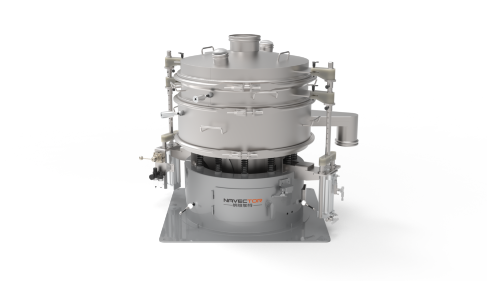
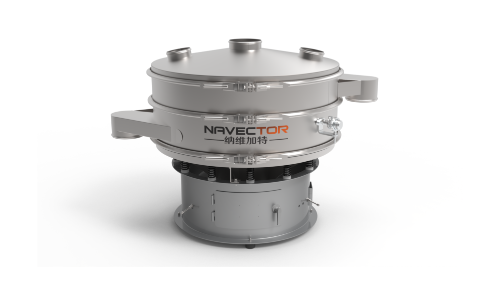
The high-speed sieve uses low-frequency, high-speed vibration technology to rapidly disperse single-crystal small-particle lithium iron phosphate on the screen surface and promote efficient screening, while optimizing material movement trajectories and screening conditions. For ultra-fine powders that are prone to agglomeration and screen clogging, maintaining good material movement on the screen surface is directly related to whether the screening process can proceed smoothly.
After improving the screening conditions, operating parameters still need to be adjusted according to material characteristics. The high-speed sieve supports stepless speed adjustment from 0 to 3000 rpm, allowing the operating speed to be flexibly adjusted according to actual screening conditions, while retaining the classic flower-disc adjustment structure. The supporting Magenite specialized screen features high tension, high wear resistance, and high screening efficiency. Its tension can reach 50 N, and its service life is 2–3 times that of conventional screens, helping reduce screen clogging and particle blockage.
The technical approach of the high-speed sieve is therefore relatively clear: first improve material movement, then adjust the operating parameters, and finally maintain screening conditions through a high-performance screen. These three steps work together to address the most practical challenges encountered when screening ultra-fine powders.
IV. Application Extension: Which Ultra-Fine Powders Are Suitable for High-Speed Sieves?
In addition to the lithium battery industry, high-speed sieves are also widely used in solid-state batteries, new materials, electronic materials, and fine chemicals. The corresponding materials include sulfide electrolytes, high-nickel single-crystal materials, conductive additives, and other ultra-fine powders, meeting precision screening and classification requirements.
Materials vary, but the screening challenges are often similar: the powder is fine, the accuracy requirements are high, and processing capacity cannot be compromised. The high-speed sieve uses low-frequency, high-speed vibration and can adjust screening parameters according to different material characteristics, making it suitable for screening various new energy materials and ultra-fine powders.
V. Selection Key Points: How Should Screening Equipment for Lithium Battery Materials Be Evaluated?
The selection of screening equipment for lithium battery materials ultimately depends on material particle size, screening challenges, and capacity requirements.
First, consider the material particle size. For ultra-fine powders with a D50 below 1 μm, particular attention should be paid to the equipment's screening capability for such materials, especially issues such as screen clogging, poor classification, and insufficient capacity. If these problems are significant, a high-speed sieve specifically designed for ultra-fine powders can be considered.
Second, consider the actual capacity requirements. Once the required screening accuracy has been determined, it is also necessary to evaluate whether the actual processing capacity of the equipment can meet production requirements. If the processing capacity is insufficient, the equipment specifications and operating parameters need to be matched again.
Finally, consider the existing equipment configuration. If a small-particle screening machine is already in place, first determine where the problem is concentrated: significant screen clogging, unsatisfactory classification performance, or insufficient processing capacity. Navector's high-speed sieve supports upgrades and modifications based on existing small-particle screening machines. There is no need to replace the entire machine; the upgrade can be completed by replacing the stepless variable-speed motor and control system.
Equipment selection requires evaluating material characteristics, screening objectives, and capacity requirements within the specific operating conditions. The clearer the conditions, the easier it is to determine the appropriate equipment configuration.
VI. Technical Q&A: Frequently Asked Questions About High-Speed Sieves for Single-Crystal Small-Particle Lithium Iron Phosphate
Q1: What problems does the high-speed sieve mainly solve in lithium iron phosphate screening?
The high-speed sieve mainly addresses problems such as screen clogging, poor classification, and insufficient capacity that occur during the screening of ultra-fine materials. It is suitable for precision screening and classification of ultra-fine powders such as single-crystal small-particle lithium iron phosphate.
Q2: Can the operating speed of the high-speed sieve be adjusted?
Yes. The high-speed sieve is equipped with a 0–3000 rpm stepless speed adjustment system, allowing the operating speed to be flexibly adjusted according to different material characteristics.
Q3: If a small-particle screening machine is already available, does the entire machine need to be replaced?
Not necessarily. Navector's high-speed sieve supports upgrades and modifications of existing small-particle screening machines. The upgrade can be completed by replacing the stepless variable-speed motor and control system, without replacing the entire machine.
The continued development of ultra-fine powder applications is also driving screening technology from conventional particle-size separation toward more precise powder control. For lithium battery materials, smaller particle sizes create new screening challenges while also providing greater technical opportunities for specialized screening technology.
The screening requirements of single-crystal small-particle lithium iron phosphate show that as material processes become increasingly refined, powder processing equipment is also undergoing deeper technological iterations. In the future, screening will serve not only as one step in material production, but also as an important technological support that continues to evolve in fine powder processing and new energy material manufacturing.
 English
 中文
中文 Español
 ภาษาไทย
 Pусский
 Bahasa Indonesia
 Tiếng Việt