In the field of metal powder production, gas atomization technology has been widely used for large-scale production due to its mature process. However, with the development of additive manufacturing and new material research, rapid verification and small-batch production have become increasingly important requirements in many R&D scenarios. Traditional powder production methods face new challenges in terms of production cycles and flexibility.
How can the preparation cycle from alloy design to powder production be shortened while meeting the flexible powder production requirements during the R&D stage? Ultrasonic atomization technology has been developed in response to this demand. Represented by Sunway New Materials’ ultrasonic atomization powder production machine, this new type of powder production equipment enables an hour-level process from alloy melting to spherical metal powder preparation, providing a new technical approach for small-batch metal powder development.
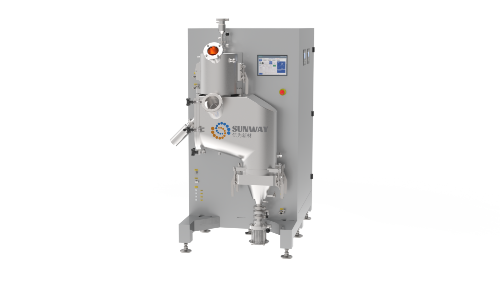
I. From Traditional Atomization to Ultrasonic Atomization: Restructuring the Powder Production Approach
Traditional metal powder production mainly adopts technical routes such as gas atomization and electrode induction gas atomization (EIGA). The basic process involves melting metal and then using high-speed gas flow to break up the molten metal into droplets, which cool and solidify into powder.
After years of development, gas atomization technology has established a mature industrial production system and is suitable for large-scale, standardized powder manufacturing. However, in R&D and small-batch production scenarios, factors such as raw material preparation, equipment scale, and production cycles limit its flexibility.
Crucible melting ultrasonic atomization technology adopts a different atomization method. It uses an ultrasonic transducer to drive a vibration component, allowing molten metal to form a liquid film under high-frequency vibration and undergo fragmentation, producing micron-sized droplets.
This change is not simply a replacement for traditional atomization processes but provides a new technical pathway for metal powder production. Through crucible melting, ultrasonic atomization reduces restrictions on raw material forms and production scale, making it more suitable for small-batch and highly flexible powder development scenarios.
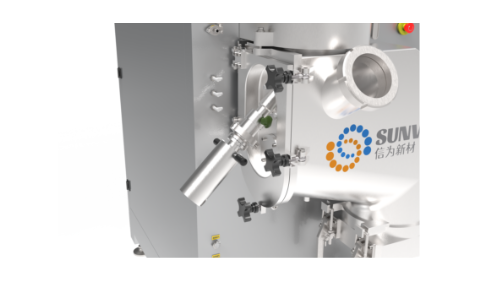
II. Working Principle: The Formation Process from Molten Metal to Spherical Powder
Crucible melting ultrasonic atomization powder production technology integrates three processes—melting, atomization, and solidification—into a single powder production workflow. Taking Sunway New Materials’ ultrasonic atomization powder production machine as an example, the equipment continuously controls these three stages to achieve the transformation from metal raw materials to spherical powder.
First, the equipment feeds metal raw materials into the crucible, where induction heating rapidly melts the materials. The melting process is completed under inert gas protection or a vacuum environment. This method does not require pre-manufactured metal rods and can directly process different forms of metal raw materials and alloy materials, providing greater flexibility for material composition adjustments.
Subsequently, the molten metal enters the ultrasonic atomization stage. The equipment applies high-frequency vibration at 20–60 kHz to the molten metal film. Under the influence of vibration energy, the liquid film breaks apart and generates a large number of micron-sized droplets. Parameters such as ultrasonic frequency and melt flow rate affect droplet size and powder particle size distribution.
Finally, the droplets rapidly cool and solidify in an inert gas environment. Due to the surface tension of the droplets, the metal particles gradually form spherical structures, ultimately producing spherical metal powders with good flowability.
III. Key Breakthroughs: How Ultrasonic Atomization Changes Small-Batch Powder Production
The shortened production cycle of small-batch metal powders is not the result of improving a single equipment parameter, but rather the result of optimizing the entire powder production process. Taking Sunway New Materials’ ultrasonic atomization powder production machine as an example, the core improvements are reflected in three aspects: raw material adaptability, process integration, and small-batch production capability.
First, the equipment simplifies the raw material preparation process. Some traditional powder production methods, especially EIGA, require the preparation of alloy rods in advance before atomization production. Sunway New Materials’ ultrasonic atomization powder production machine supports various forms of raw materials, including final alloys, master alloys, and pure elements, completing melting and alloying directly inside the equipment and shortening the material preparation cycle.
Second, the equipment integrates the melting and ultrasonic atomization processes, making the powder production workflow more compact.
At the same time, its small-batch production capability from hundreds of grams to kilograms enables powder production to better meet the needs of material verification and process adjustment during the R&D stage.
Therefore, “hour-level powder production” does not simply mean pursuing higher production speed. Instead, it represents the optimization of the process and flexible configuration, allowing metal powder production to better serve new material development and customized manufacturing requirements.
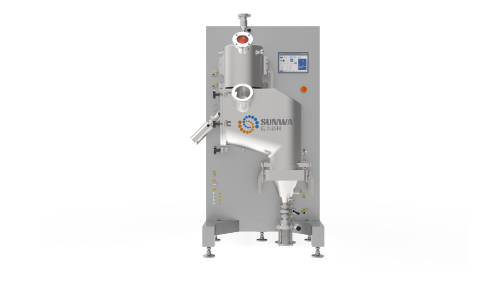
IV. Technical Comparison: Differences Between Large-Scale Production and Flexible Powder Manufacturing Requirements
Gas atomization and ultrasonic atomization are not simple replacement technologies but different technical solutions designed for different application requirements. The former focuses on large-scale, standardized production, while the latter is more suitable for small-batch and highly flexible powder development.
The differences between the two powder production routes are mainly reflected in the following aspects.
|
Comparison Dimension |
Traditional Gas Atomization Technology |
Sunway New Materials Crucible Melting Ultrasonic Atomization Powder Production Machine |
|
Technical Characteristics |
High-speed gas flow breaks molten metal; mature process |
Ultrasonic vibration acts on the molten metal film to achieve atomization and powder production |
|
Production Positioning |
Large-scale, standardized production |
Small-batch production and material development |
|
Raw Material Method |
Some processes require pre-manufactured alloy rods |
Supports final alloys, master alloys, pure elements, and other raw materials |
|
Application Scenarios |
Mature large-scale powder production |
New material development, small-batch customization, rapid verification |
V. Application Scenarios: Expansion from Laboratory Research to Advanced Manufacturing
The crucible melting ultrasonic atomization powder production machine is mainly applied to the preparation of non-ferrous metal and alloy powders with melting points below 1300°C, including material systems such as tin, zinc, magnesium, aluminum, and lead.
In new material development, the equipment supports small-batch powder preparation and can be used for the development and verification of different alloy systems. In additive manufacturing, the equipment can produce highly spherical metal powders that meet the requirements of 3D printing for powder flowability and consistency.
In addition, the small-batch production characteristics of the equipment make it suitable for multi-variety powder development in advanced manufacturing, providing more flexible powder production solutions for special material applications.
VI. Future Trends: From Powder Production Equipment to Material Development Tools
With the continuous growth of new material development demands, crucible melting ultrasonic atomization powder production technology will continue to evolve toward higher flexibility and more precise control. Based on existing applications in non-ferrous metals and their alloys, the equipment will further expand material systems and improve powder production stability through process optimization.
In the future, the value of ultrasonic atomization powder production machines will extend beyond simply “manufacturing powder.” They will become important R&D tools connecting alloy design, powder development, and application verification, driving material development from experience-based exploration toward faster iteration.
The value of ultrasonic atomization powder production technology lies not only in improving powder production efficiency but also in changing the response model of metal powder development. New-generation equipment represented by Sunway New Materials’ crucible melting ultrasonic atomization powder production machine enables powder preparation to better align with material research requirements and accelerates the development process from alloy design to application verification.
In the future, as ultrasonic atomization technology continues to advance, it will promote metal powder development from the traditional “produce first, verify later” model toward a more flexible, efficient, and rapid iteration model, providing stronger technical support for new material exploration.


 English
 中文
中文 Español
 ภาษาไทย
 Pусский
 Bahasa Indonesia
 Tiếng Việt