In the fields of additive manufacturing, powder metallurgy, and high-end consumer electronics, the performance of metal powders directly affects the forming quality of components. With the development of lightweight AR glasses, smart wearables, and other 3C products, lightweight non-ferrous metals such as magnesium alloys and aluminum alloys have gradually become important materials for structural lightweight design due to their advantages of low density and high specific strength.
At the same time, the expanding application of lightweight alloys in advanced fields such as additive manufacturing has raised higher requirements for metal powder performance. Powder sphericity, particle size distribution, oxygen content, and stability all influence the final forming performance. Therefore, developing high-quality and stable metal powder preparation technologies has become a key factor. Compared with traditional gas atomization processes, crucible melting ultrasonic atomization technology demonstrates new application value in the preparation of small-batch, high-quality spherical metal powders.
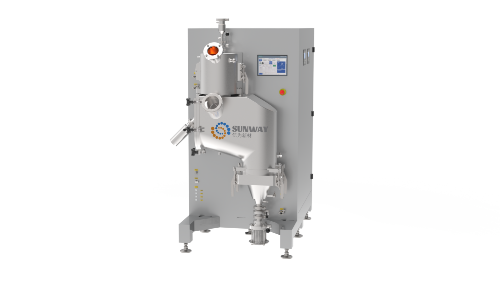
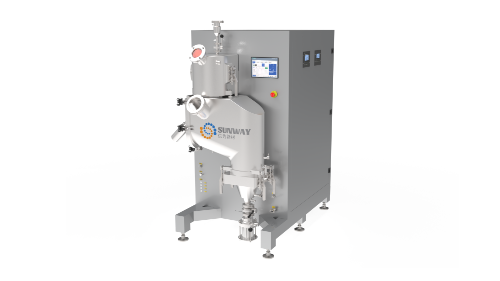
This article will analyze how the ultrasonic atomization powder machine from Sunway New Materials supports the preparation of magnesium-aluminum lightweight alloy powders.
I. Why Have Magnesium-Aluminum Lightweight Alloy Powders Become an Important Choice for Lightweight Additive Manufacturing?
Lightweight design has become a continuous focus in advanced manufacturing. In 3C products such as AR glasses and smart wearables, products need to integrate more functions within limited space while minimizing weight, placing higher demands on material performance. Magnesium alloys and aluminum alloys are gradually being applied in lightweight structural designs due to their characteristics of low density and high specific strength. Among them, magnesium alloys offer lower density advantages and are suitable for weight-sensitive application scenarios, while aluminum alloys are widely used in industrial manufacturing due to their mature processing foundation and comprehensive performance.
With the development of additive manufacturing technology, lightweight alloy powders have also gained new application demands. Compared with traditional processing methods, additive manufacturing enables the formation of complex structures through layer-by-layer deposition, providing more possibilities for lightweight alloy applications. However, the printing process also places higher requirements on powder quality. In addition to stable alloy composition, powder sphericity, flowability, and particle size distribution all affect powder spreading performance and final forming quality. Therefore, high-quality powder preparation capability has become an important foundation for the further application of magnesium-aluminum lightweight alloys in additive manufacturing.
II. What Technical Challenges Are Faced in Magnesium-Aluminum Lightweight Alloy Powder Preparation?
Magnesium alloys and aluminum alloys possess excellent lightweight characteristics, but their powder preparation processes still face certain technical challenges.
First, controlling oxidation of active elements is relatively difficult. Active metals such as magnesium can easily react with oxygen in the molten state. During powder production, a stable inert gas protection environment is required to reduce the impact of oxygen content changes on powder performance.
Second, powder performance control requires strict requirements. In additive manufacturing processes such as powder bed fusion (PBF), powder sphericity, flowability, and particle size distribution affect powder spreading uniformity and forming quality. Therefore, high-quality powders need to have good particle morphology and stable particle size control capabilities.
In addition, new material development requires higher flexibility from powder production equipment. Taking lightweight applications such as AR glasses and smart wearables as examples, product development cycles are fast, and new material research requires continuous validation of different alloy systems. Therefore, the research stage requires not only high-performance powders but also small-batch and rapid-response powder preparation capabilities.
III. Why Is Traditional Gas Atomization Technology Difficult to Fully Meet the Needs of New Material Development?
Gas atomization is one of the mainstream technologies for metal powder production. It uses high-speed inert gas flow to impact molten metal, breaking it into droplets that rapidly solidify into powders. This technology is mature and suitable for large-scale and stable production.
However, powder preparation requirements during new material development differ from industrial mass production. For lightweight materials such as magnesium alloys and aluminum alloys, researchers often need to frequently adjust alloy compositions and verify powder performance during development. Therefore, powder production equipment needs to not only ensure powder quality but also provide strong material adaptability and process adjustment flexibility.
Traditional gas atomization equipment is generally designed for continuous production. In small-batch and multi-material experimental scenarios, it may face challenges such as large equipment size, high material changeover costs, and complex process adjustments. For laboratory research, pilot verification, and new alloy development, more flexible powder preparation solutions have become an important requirement.
IV. How Does the Ultrasonic Atomization Powder Machine Support the Preparation of High-Performance Magnesium-Aluminum Lightweight Alloy Powders?
The challenge of preparing powders from lightweight materials such as magnesium alloys and aluminum alloys lies not only in converting molten metal into powder but also in controlling oxidation, powder morphology, and process flexibility during research and development. To meet these requirements, ultrasonic atomization powder technology provides a new solution for lightweight alloy powder development through inert gas protection, high-frequency ultrasonic vibration atomization, and an integrated powder production process.
1. Inert Gas Protection to Reduce the Oxidation Risk of Active Metals
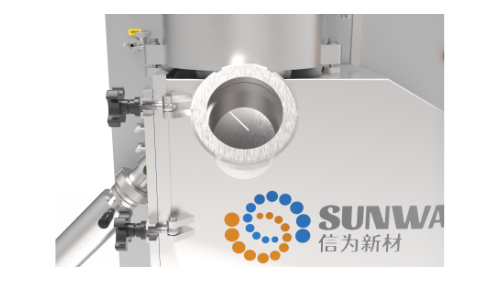
During the production of active metal powders, oxidation control is an important factor affecting powder performance. The ultrasonic atomization powder machine adopts a closed melting and atomization environment, completing the powder preparation process under vacuum or inert gas protection conditions. This reduces contact between molten metal and air, helping to minimize oxidation risks.
2. Ultrasonic Vibration Atomization to Optimize Powder Performance
At the same time, ultrasonic vibration atomization improves the powder formation process. The equipment applies high-frequency ultrasonic energy to molten metal, dispersing it into fine droplets that rapidly cool and solidify in an inert gas environment to form spherical metal powders. By adjusting ultrasonic parameters and molten metal flow rate, the particle size distribution of powders can be optimized. According to process verification, the ultrasonic atomization powder machine from Sunway New Materials can achieve powder sphericity ≥95%, oxygen increase of 50–150 ppm, and powder yield exceeding 95%, making it suitable for high-quality metal powder development applications.
3. Small-Batch Production to Accelerate Material Development and Validation
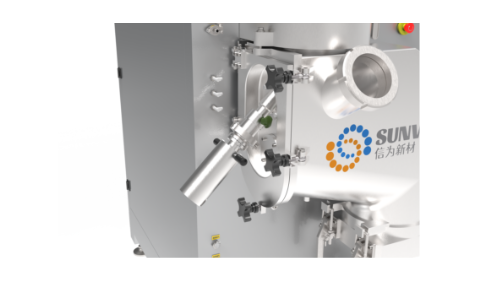
In addition, new material development usually requires multiple rounds of formulation adjustments and performance verification, placing higher requirements on the flexibility of powder production equipment. The ultrasonic atomization powder machine from Sunway New Materials supports small-batch powder production from 100 g to kilogram levels, making it suitable for laboratory research, pilot validation, and small-scale production. Through the complete process of “melting—ultrasonic atomization—powder collection,” it provides an efficient validation platform for lightweight alloy powder development.
V. What Additive Manufacturing Applications Are Suitable for Ultrasonic Atomization Powder Machines?
The ultrasonic atomization powder machine mainly targets metal powder research and small-batch production requirements, and is suitable for material development in fields such as 3D printing, powder metallurgy, and medical applications.
For lightweight non-ferrous metal materials such as magnesium alloys and aluminum alloys, the equipment can support powder preparation for different alloy systems, helping research institutions and enterprises conduct material validation, process optimization, and exploration of new alloys.
In the development of lightweight products such as AR glasses and smart wearables, material solutions require continuous validation and optimization. Ultrasonic atomization powder technology provides a more flexible preparation method for lightweight alloy powder development, helping researchers advance the process from material exploration to application validation.
VI. From Laboratory Research to Industrial Applications: How Will Metal Powder Preparation Technology Develop in the Future?
With the continuous advancement of additive manufacturing and new material development, the demand for metal powder preparation is shifting from traditional large-scale production toward small-batch production, multi-material compatibility, and rapid validation. In the future, powder production equipment will need to not only meet powder quality requirements but also provide stronger material adaptability and process adjustment flexibility to satisfy different material development and application validation needs.
With its advantages in small-batch and high-quality powder preparation, ultrasonic atomization powder technology provides a more flexible option for the development of new metal powders. In the future, powder equipment with flexible preparation capabilities will play a greater role in material research, pilot validation, and industrial applications.
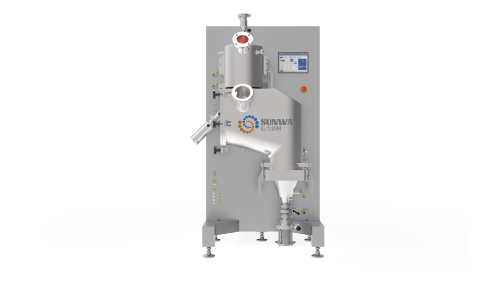
Ultrasonic atomization powder technology provides a new preparation approach for lightweight metal powder development. Its application in small-batch, high-quality powder production reflects the trend toward more flexible and refined metal powder preparation. Based on the practical application of Sunway New Materials’ crucible melting ultrasonic atomization powder machine, future material innovation will not only rely on new alloy development but also require more flexible and stable powder preparation capabilities. Only by continuously improving powder preparation technologies can more high-performance materials move from experimental exploration to practical applications.

 English
 中文
中文 Español
 ภาษาไทย
 Pусский
 Bahasa Indonesia
 Tiếng Việt