In the laboratory of a biotechnology company in Suzhou, the R&D team stared at the microscope with concern—the medical silicone microspheres they developed frequently experienced agglomeration and contamination issues during screening. The originally smooth microsphere surfaces even developed electrostatic dust caused by friction. "These low-density porous microspheres are like marshmallows; if you're not careful, they quickly clump together," sighed Project Manager Wang. It was precisely this challenge that led them to discover the unique value of the microsphere sieve.
I. What Is the Working Principle of This Equipment?
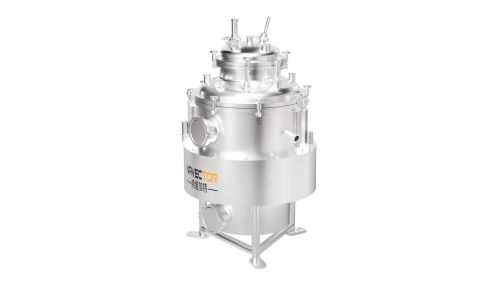
The microsphere sieve adopts a "vibration-assisted screening + negative pressure dewatering" operating mode, integrating post-processing procedures such as filtration, washing, dewatering, and drying into a single piece of equipment to achieve integrated processing of microsphere products.
During operation, after the microsphere suspension enters the equipment, liquids and fine impurities quickly pass through the screen under gentle vibration, while microspheres of the target particle size are evenly retained on the screen surface, avoiding particle damage and morphology changes caused by traditional centrifugation or strong mechanical forces.
Subsequently, the negative pressure system continuously removes the liquid phase and works together with the online washing function to complete replacement and cleaning. The microspheres gradually achieve dewatering and drying. The entire process eliminates the need for frequent material transfer, reducing contamination risks while helping maintain particle size consistency, sphericity, and surface structure integrity of the microspheres.
II. Why Can It Solve the Agglomeration Problem?
During microsphere screening, agglomeration and screen blockage have always been key factors affecting efficiency. Taking silica microspheres and polymer microspheres as examples, their small particle size and complex surface characteristics often lead to particle adhesion, screen clogging, and reduced filtration efficiency during conventional screening processes.
The Navector microsphere sieve maintains good dispersion of microsphere materials during screening by optimizing the screening structure and motion pattern. The equipment adopts a screening method specifically suited for microsphere processing, reducing material accumulation on the screen surface, allowing liquids to pass rapidly through the filter mesh, while minimizing mutual compression and agglomeration between microspheres.
Compared with conventional filtration equipment that requires multiple transfers, cleaning, and processing steps, the microsphere sieve can complete filtration, washing, and dewatering operations in a sealed environment, reducing the risk of external contamination and preventing microsphere loss during transfer.
In addition, considering the soft and fragile characteristics of microsphere materials, the equipment optimizes the movement process to keep microsphere damage at a minimal level during screening, making it suitable for applications requiring high particle integrity, such as chromatography media, drug-loaded microspheres, medical aesthetic microspheres, and IVD microspheres.
III. Who Needs This Equipment Most?
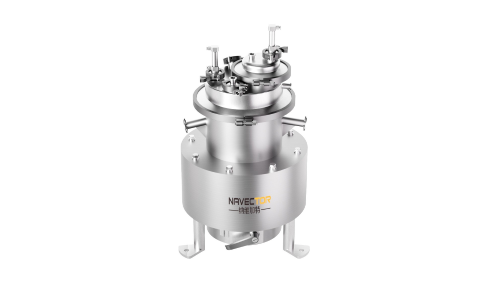
The equipment is naturally suited to three major user groups:
Medical aesthetic raw material manufacturers: Companies producing injectable fillers based on PLLA microspheres, where materials require absolute sterility and extremely narrow particle size distribution (typically controlled within 20–500 μm);
Diagnostic reagent developers: Fluorescent microspheres need to maintain surface activity during antibody coating processes, while mechanical stress from conventional screening may damage molecular structures;
Chromatography column manufacturers: The screening precision of silica-based packing materials directly affects column efficiency. After adopting the microsphere sieve, one company improved the theoretical plate number of its HPLC columns by 17%.
IV. Which Production Processes Can Benefit from It?
Throughout the complete process chain of silica microspheres, the microsphere sieve participates in at least three critical stages:
Pre-treatment stage: Rapid drying of wet microspheres after synthesis. The built-in ultrasonic vibration drying module can reduce moisture content from 70% to 5% within 30 minutes;
Classification stage: Multi-stage screening is achieved through multi-layer screens (optional 2–5 layers). In one experiment, the team successfully separated microspheres into four particle size ranges, with the standard deviation of each range controlled within ±3 μm;
Final inspection stage: By integrating vacuum adsorption with optical detection, damaged microspheres are automatically removed, increasing the qualification rate of one product batch from 82% to 99.6%.
Particularly noteworthy is the modular design of the equipment. When Wang's team needed to adjust screen configurations, they only had to replace the pre-installed Japanese imported filter elements (Navector's self-produced sintered mesh or adhesive mesh). The entire process could be completed within 45 minutes, far shorter than the 3–4 hours typically required for conventional screen replacement.
V. Under What Conditions Does It Outperform Traditional Sieves?
The outstanding performance of the microsphere sieve is mainly reflected in three special scenarios:
High-humidity environments: When the moisture content of silica microspheres exceeds 10%, the efficiency of conventional screening equipment drops sharply, while the negative pressure system of the microsphere sieve maintains stable screening performance;
Wide particle size distribution: For mixed microspheres ranging from 3 μm to 4000 μm, its classification accuracy is significantly higher than that of conventional cyclone separators;
Sterile requirements: The pressure resistance range of the fully sealed chamber (-0.1 to 0.3 MPa) allows it to withstand high-pressure steam sterilization.
VI. How to Select the Right Model for Your Materials?
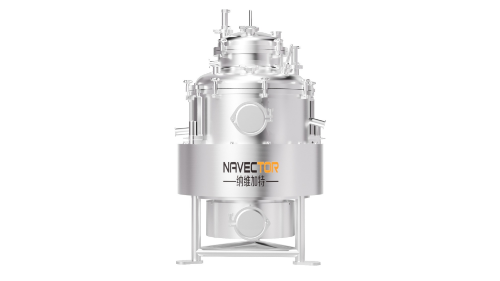
The key to equipment selection lies in matching three dimensions:
Material characteristics: Porous silica microspheres tend to absorb moisture due to their high surface area, so models with a vacuum degree of ≥0.2 MPa are recommended;
Processing capacity requirements: Single-layer screen models are suitable for laboratory applications, while production lines require multi-layer screen configurations, such as the dual-layer screen selected by Wang's team, featuring an effective screening area of 530 cm²;
Process complexity: For integrated drying and screening processes, it is necessary to confirm whether the equipment is equipped with an ultrasonic vibration drying module and a PLC temperature control system.
Special attention should also be paid to equipment material certification: 316L stainless steel not only provides excellent corrosion resistance but also prevents metallic precipitates from appearing on microsphere surfaces through its electropolishing process. In addition, the explosion-proof motor design is particularly important for microspheres containing organic solvents. During an unexpected ethanol vapor leakage incident, this safety design successfully prevented combustion risks.
When Wang's team fed a new batch of silica microspheres into the microsphere sieve, the screening efficiency curve on the operating interface rose steadily, while the microspheres observed under the microscope maintained their ideal spherical shape. This equipment not only solved their technical challenges but also reshaped their understanding of screening technology—demonstrating that precise control and sterile assurance can coexist in perfect harmony.
If you are facing similar technical challenges, feel free to schedule a free material testing appointment, and let us work together to find the most suitable solution.

 English
 中文
中文 Español
 ภาษาไทย
 Pусский
 Bahasa Indonesia
 Tiếng Việt