The application demand for copper alloy powders in additive manufacturing, powder metallurgy, and medical fields is concentrated on high sphericity, narrow particle size distribution, and relatively low oxygen increase. From melting to powder formation, metal powders undergo melt control, atomization, cooling and solidification, and powder collection. Each stage can affect the quality of the final powder. Conventional gas atomization can be used for metal powder preparation, but for new alloy development and small-batch trials, equipment investment, infrastructure, and production scale often need to be considered comprehensively.
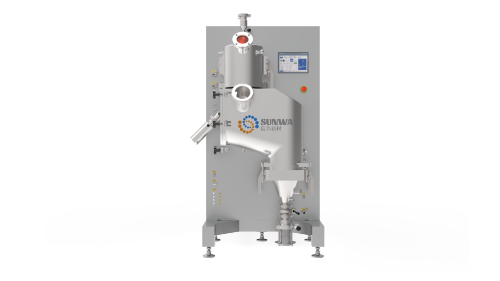
For copper alloy powders, powder-making equipment is responsible for more than production. It also needs to address the dual requirements of flexibility and powder quality in material development. Sunway New Materials' ultrasonic atomization powder making machine combines induction melting with ultrasonic atomization and can process various metal materials such as copper alloys. It also supports small-batch powder production, providing a new equipment option for copper alloy powder development and trial production.
I. Industry Challenges: How Can Copper Alloy Powder Development Balance Batch Size and Flexibility?
Copper alloy powders are used both in mature material production and new alloy development. Large-scale production focuses on capacity, continuous operation, and powder yield, while R&D trials may only require several hundred grams to several kilograms to complete a single composition verification. If equipment is configured according to the scale of large-scale production, small-batch trials have to bear relatively high equipment investment and infrastructure costs.
Once the formulation is adjusted, the powder-making test also needs to be repeated. In copper alloy development, the feedstock can be the final alloy, master alloy, or pure elements proportioned according to the formulation. Each composition adjustment may correspond to a new round of powder-making verification. The amount required for a single trial may be small, but the tests can continue round after round. Equipment that is too large makes it difficult to control R&D costs, while insufficient equipment capacity makes it difficult to support powder development. How to balance capacity and flexibility is an equipment selection issue that cannot be avoided in copper alloy powder development.
II. Small-Batch Trials: How Does an Ultrasonic Atomization Powder Making Machine Work?
For small-batch copper alloy powder trials, the key challenge is whether the powder-making cycle can keep pace with the speed of formulation iteration. For small-batch R&D, the core requirements for equipment lie in three aspects: flexibility, speed, and convenient material changes.
The feedstock configuration is more flexible. In copper alloy development, the final alloy, master alloy, or pure elements can all be used as the charge and alloy composition can be prepared in the crucible. There are no special requirements for the shape of the raw materials. After the formulation is adjusted, the next melting trial can begin directly. This flexibility is more practical for small-batch R&D involving repeated verification of new alloy formulations.
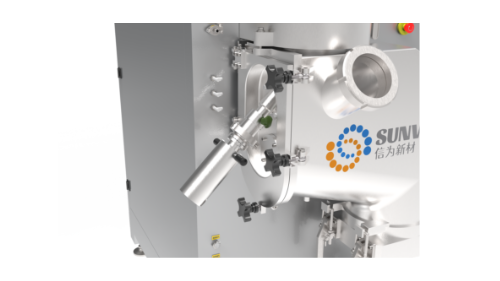
Small-batch powder production is better matched. When only several hundred grams or several kilograms of powder are needed at a time, equipment that is too large can increase the burden on the R&D process. Sunway New Materials' ultrasonic atomization powder making machine provides 0.4 L and 0.8 L crucible specifications, covering powder production requirements from 100 g to several kilograms. The equipment occupies only a few square meters, including infrastructure, and does not require a complex high-pressure gas system.
Melting and powder collection are integrated within the same process. From material preparation and induction melting to ultrasonic atomization, cooling and solidification, cyclone separation, and classified powder collection, each stage is connected within the same powder-making process. Ultrasonic frequency and metal liquid flow rate can also be used to fine-tune the particle size distribution.
When selecting equipment for material development, it is important to consider whether the testing process can run smoothly. Formulation adjustment, powder production, and performance verification are closely connected. Less waiting between stages allows subsequent tests to proceed more smoothly.
III. Selection Considerations: Which R&D Needs Are More Suitable for an Ultrasonic Atomization Powder Making Machine?
During equipment selection, the R&D stage, powder requirements, and site conditions can be considered together. If these three aspects do not match, even impressive equipment specifications may be difficult to put into practical use.
Is the task focused on R&D trials or large-scale production? If the current task mainly involves 100 g to several kilograms of small-batch powder production, new alloy formulation verification, or special alloy development, an ultrasonic atomization powder making machine is relatively well suited to these R&D tasks. Once the project enters large-scale production, the equipment solution needs to be reassessed based on actual production capacity and production methods.
Does the site have the necessary supporting conditions? The space and infrastructure of the R&D site also need to be included in the selection process. Sunway's ultrasonic atomization powder making machine requires only a few square meters of overall space, including supporting infrastructure. The powder-making process uses inert gas protection and does not require a complex high-pressure gas system. For laboratories, R&D centers, and similar applications, the available site conditions can also accommodate the equipment layout.
Are there plans for multi-material development later? If the R&D tasks are not limited to copper alloys but also involve aluminum alloys, magnesium alloys, precious metals, or new alloy powders, the material range can also be considered during equipment selection. The more complex the material system and the more frequently the formulation is adjusted, the more valuable equipment flexibility becomes. Once these three requirements are clearly defined, the match between the equipment and the task becomes easier to determine.
IV. Practical Case: How Can Multiple Rounds of Formulation Trials Be Connected?
A new materials company began developing a copper alloy powder formulation and needed to verify different alloy compositions through multiple rounds of trials. The powder requirement for each trial was relatively small, around 100 g to several kilograms, while the raw material composition also had to change according to the formulation. The project was still at the R&D stage, with many powder-making batches but limited quantities per batch. Once the equipment specifications became disconnected from the trial scale, raw materials and equipment resources could easily be wasted.
The company needed to find a suitable powder-making method that could accommodate both small-batch powder production and repeated formulation adjustments. It subsequently selected Sunway New Materials' ultrasonic atomization powder making machine for small-batch trials and selected a 0.4 L crucible according to the amount required for each batch. The raw materials could be the final alloy, master alloy, or pure elements, configured directly according to the R&D formulation. After melting, ultrasonic atomization was performed, and the powder was collected after cyclone separation. For subsequent formulation changes, the raw material composition could simply be adjusted for the next trial. When the particle size distribution needed to be adjusted, the ultrasonic frequency and metal liquid flow rate could also be modified.
In this way, changes in the formulation could be followed by corresponding adjustments in powder production, making the process more suitable for repeated R&D trials.
V. Future Trends: From Copper Alloys to New Alloys, How Can Powder-Making Equipment Expand?
Spherical metal powders are already used in 3D printing, powder metallurgy, aerospace, medical applications, and other fields. Different applications have different requirements for sphericity, particle size distribution, and powder quality. The powder-making process also needs to take powder morphology, particle size control, and powder quality into account.
Material systems continue to expand. Aluminum alloys, magnesium alloys, copper alloys, precious metals, and special alloys have entered the range of materials that can be prepared, while highly reactive metals, refractory metals, and their alloys are directions for further development. As the range of materials becomes broader, the adaptability of powder-making equipment to melting temperatures, atmospheric conditions, and feedstock forms becomes increasingly important.
Powder-making processes also need to keep pace with material development. New alloy development often involves small batches and repeated formulation adjustments. If the powder-making stage lacks the corresponding flexibility, it can easily restrict subsequent testing. When the formulation changes, the form of the raw materials may also change; when process parameters are adjusted, the particle size distribution needs to be adjustable as well. Equipment that can use various feedstocks such as final alloys, master alloys, or pure elements, while also allowing adjustment of particle size distribution, can make repeated R&D trials run more smoothly. Material adaptability, powder quality control, and flexibility in R&D trials will remain areas for continuous refinement of this type of powder-making equipment.
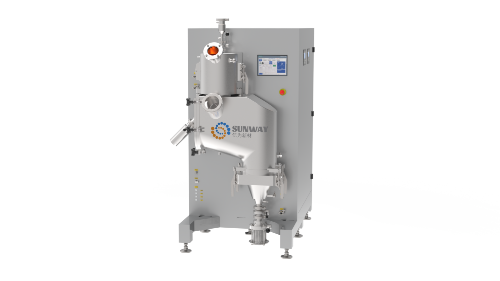
Metal powder development is essentially a repeated calibration process involving composition, melting, and powder characteristics. For materials such as copper alloys, once the formulation changes, the melting state and powder characteristics immediately enter another round of verification. After multiple trials, each round contributes to a better understanding of the material. The ultrasonic atomization powder making machine provides more flexible trial conditions for this type of development: trial quantities from 100 g to several kilograms, no restrictions on raw material forms, and the ability to fine-tune particle size distribution. The trial scale does not constrain the pace of R&D, allowing attention to return to the material itself and powder performance verification.
Beyond copper alloys, the formulation exploration and process verification of new metal materials also require flexible trial methods that leave room for adjustment. In addition to carrying out production tasks, powder-making equipment can also serve as fundamental support for material development, allowing the powder-making process to keep pace with the iteration speed of laboratory research.


 English
 中文
中文 Español
 ภาษาไทย
 Pусский
 Bahasa Indonesia
 Tiếng Việt