In the field of metal additive manufacturing, the quality of metal powder directly affects the printing process and final product quality. As 3D printing expands from mature material applications to new alloy development and customized manufacturing, the R&D stage places higher demands on the flexibility of metal powder preparation, small-batch production capabilities, and R&D efficiency.
Traditional powder production methods are more suitable for large-scale production of mature materials. However, in R&D scenarios such as new material exploration and small-batch validation, how to quickly connect material design with powder preparation has become an important factor affecting R&D efficiency.
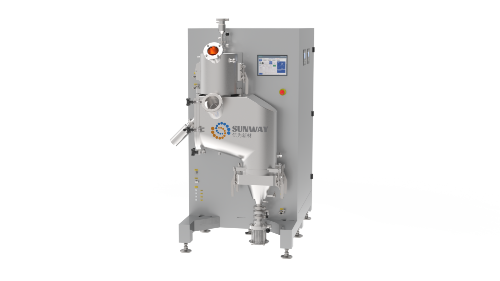
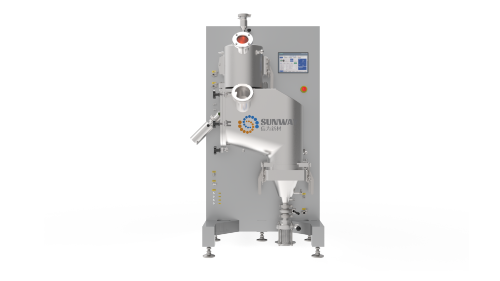
Ultrasonic atomization powder production technology was developed in response to these needs as a new powder production solution. Equipment represented by Sunway New Materials' crucible-melting ultrasonic atomization powder machine integrates melting and atomization processes, enabling a rapid transition from alloy preparation to powder formation and providing a more flexible and efficient production route for 3D printing metal powder R&D.
I. Limitations of Traditional Powder Production Technologies: The Trade-Off Between Large-Scale Production and R&D Flexibility
After years of development, metal powder production technology has established several mature process routes. Among them, water atomization, gas atomization, and Plasma Rotating Electrode Process (PREP) each play an important role in cost control, large-scale production, and high-quality powder production.
Water atomization uses high-speed water flow to impact molten metal, breaking the metal into powder. It features mature equipment and low production costs and is widely used in industrial powder manufacturing. However, due to the influence of the cooling medium and oxidation control, the powder generally has relatively limited sphericity, which restricts its application to some extent in high-performance additive manufacturing.
Gas atomization uses high-speed inert gas flow to break up molten metal and is currently one of the major methods for large-scale production of metal powders for 3D printing. It offers relatively high powder sphericity and broad material compatibility. However, it requires higher equipment investment and operating conditions and is more suitable for stable, large-volume production.
The Plasma Rotating Electrode Process (PREP) uses centrifugal force generated by a high-speed rotating electrode to produce powder. It offers high powder purity and good sphericity and is suitable for the production of certain high-quality powders.
Overall, traditional powder production technologies have clear advantages in large-scale production. However, when faced with the needs of new alloy development, small-batch validation, and rapid iteration, R&D places greater emphasis on the flexibility and efficiency of powder production. This has also increased attention toward flexible powder production technologies such as ultrasonic atomization.
II. Technical Analysis: How Does an Ultrasonic Atomization Powder Machine Produce Metal Powders for 3D Printing?
The core of ultrasonic atomization powder production technology is to apply high-frequency vibrational energy to molten metal, causing the molten metal film to become unstable and break up into micron-sized droplets. These droplets then rapidly solidify in an inert gas environment to form spherical metal powder.
Taking Sunway New Materials' crucible-melting ultrasonic atomization powder machine as an example, the powder production process mainly includes three stages: melting, atomization, and solidification.
First, the metal raw materials are added to the crucible and melted through induction heating. Compared with powder production methods that rely on specific raw material forms, the crucible melting mode can directly process final alloys, master alloys, and pure elements, providing greater flexibility for new alloy development and composition adjustment.
Next, the molten metal enters the ultrasonic atomization stage. The equipment applies high-frequency ultrasonic vibration at 20–60 kHz to the molten metal, causing the metal film to break up under the applied energy and form a large number of fine droplets. By adjusting the ultrasonic frequency and molten metal flow rate, the particle size distribution of the powder can be controlled.
Finally, the metal droplets produced through atomization rapidly cool and solidify in an inert gas environment such as argon or nitrogen. Due to the surface tension of liquid metal, the droplets tend to form a spherical shape during formation and maintain a stable structure after solidification.
The value of ultrasonic atomization lies not only in optimizing the powder production method, but also in connecting alloy melting, composition adjustment, and powder production. This helps R&D personnel complete the entire process from alloy design to powder validation more efficiently.
III. Application Value: Why Is an Ultrasonic Atomization Powder Machine Suitable for 3D Printing Metal Powder R&D?
In metal 3D printing material R&D, powder production must consider not only powder properties but also the flexibility required throughout the material development process. Compared with traditional powder production methods that primarily target large-scale production, ultrasonic atomization powder production technology is more suitable for R&D scenarios such as new alloy exploration and customized powder development.
1. Small-Batch Production to Accelerate Material R&D Validation
Sunway New Materials' crucible-melting ultrasonic atomization powder machine combines induction melting with ultrasonic atomization, enabling a continuous transition from alloy melting to powder production. The equipment is available with 0.4 L and 0.8 L crucibles to meet the small-batch powder production needs of laboratory research and pilot-scale development.
R&D personnel can directly use pure elements, master alloys, or final alloys as raw materials and adjust material compositions according to development requirements, shortening the cycle from alloy design to powder production and printing validation.
2. High-Quality Powder to Meet Additive Manufacturing Requirements
During ultrasonic atomization, metal droplets rapidly cool and solidify in an inert gas-protected environment, which helps form metal powders with high sphericity and good flowability. The equipment can achieve powder sphericity of ≥95%, a recovery rate of ≥95%, and an oxygen increase of approximately 50–150 ppm. It is suitable for producing powders from materials such as aluminum alloys, magnesium alloys, and copper alloys.
3. Compact Design to Lower the Barrier to R&D Deployment
The equipment adopts a compact structure and requires only a few square meters of floor space. Compared with large industrial powder production equipment, it has lower requirements for space and supporting facilities, making it more suitable for research institutions, material companies, and additive manufacturing companies conducting in-house powder R&D.
IV. Practical Application: Ultrasonic Atomization Powder Machine Enables In-House R&D of 3D Printing Metal Powders
In lightweight material development, new materials such as aluminum alloys and magnesium alloys often require multiple rounds of iteration involving composition adjustment, powder production, and printing validation. Traditional powder supply is usually based on commercially available powders with existing compositions and specifications, making it difficult to meet the needs of new material development, where formulations often need to be adjusted and prototypes produced rapidly.
With ultrasonic atomization powder production technology, R&D personnel can directly convert pure elements, master alloys, or final alloys into corresponding powders according to material design requirements, enabling a rapid transition from alloy composition adjustment to powder production. By independently producing powders with different compositions, R&D personnel can promptly conduct printing tests and performance analysis, accelerating the validation process for new materials.
V. Technical Significance: From Powder Production Equipment to a Material R&D Tool
The development of additive manufacturing requires not only high-performance metal powders but also more flexible approaches to material development. Ultrasonic atomization powder production technology connects alloy design, powder production, and printing tests, enabling R&D personnel to explore new materials more efficiently.
For material R&D, the significance of in-house powder production lies in reducing dependence on powder suppliers, allowing composition adjustment, powder development, and performance validation to be more closely integrated and improving the efficiency of new material development.
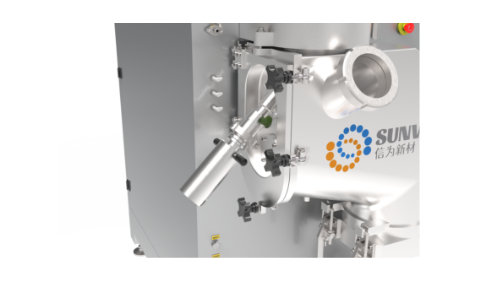
New equipment represented by Sunway New Materials' crucible-melting ultrasonic atomization powder machine provides a more flexible technical solution for in-house metal powder R&D. In the future, as the technology continues to develop, ultrasonic atomization will play a greater role in new material exploration and advanced manufacturing, driving powder R&D from traditional supply-based models toward more flexible and innovative approaches.


 English
 中文
中文 Español
 ภาษาไทย
 Pусский
 Bahasa Indonesia
 Tiếng Việt