I. What Is the Working Principle of This Equipment?
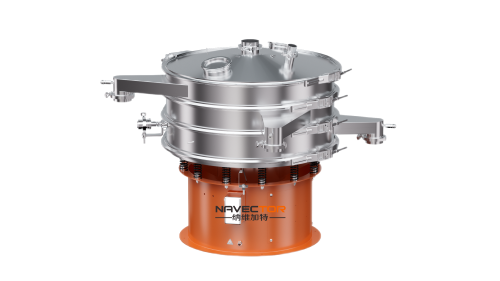
One day, Engineer Wang from a new material company in Jiangsu was deeply troubled. The resin powder produced by their company frequently experienced the issue of “fine powder being electrostatically adsorbed and blocking the screen mesh” during the screening process, resulting in raw material losses of up to 1.2% per batch. Everything changed after they came into contact with the ultrasonic vibrating screen. This equipment uses a 38kHz high-frequency ultrasonic generator to convert electrical energy into mechanical vibration waves transmitted to the screen mesh, causing the mesh to generate 38,000 micro high-frequency vibrations per second. It is like installing a “nano-level vibration massager” on the screen mesh, which not only destroys the hydrogen bonding effect between resin powder particles, but also neutralizes electrostatic adsorption forces. This technology can maintain screen permeability above 95%, allowing resin particles originally stuck in the mesh openings to be gently pushed away by an invisible force.
II. Why Can It Solve Agglomeration Problems?
Engineer Wang’s team later discovered that the key reason for low resin powder screening efficiency was not only screening speed, but also the tendency of resin powder to remain in an agglomerated state during the screening process.
When traditional vibrating screens process resin powder, fine particles are easily affected by static electricity, temperature rise, and slight moisture absorption, resulting in agglomeration and mesh sticking. Once part of the screen mesh becomes blocked, materials tend to accumulate on the screen surface, further affecting screening efficiency.
The ultrasonic vibrating screen superimposes high-frequency micro-vibrations on the basis of ordinary vibration, allowing the screen mesh to maintain continuous micro-amplitude vibration during operation, which helps reduce fine powder adhesion on the mesh surface. In actual testing, when the operating temperature remained stable at around 28°C, the softening and adhesion of resin powder improved significantly. Combined with a high-permeability mesh design, material accumulation on the screen surface was greatly reduced. For fine resin powder above 300 mesh, this high-frequency micro-vibration can also weaken electrostatic adsorption and agglomeration between powders to a certain extent, allowing materials to pass through the screen mesh more evenly and improving screening stability.
III. Who Needs This Equipment Most?
The main beneficiaries of this type of equipment are companies handling high-value fine chemicals. For example, a lithium battery material manufacturer found that when screening ternary cathode materials, traditional screen meshes above 400 mesh required shutdown and cleaning every 8 hours on average. After switching to an ultrasonic vibrating screen, screen mesh service life increased threefold, while screening accuracy improved from ±5μm to ±2μm.
An even more typical case comes from a pharmaceutical intermediate manufacturer. When screening active ingredients with particle size distributions ranging from 10-200μm, the equipment’s multi-layer gradient mesh configuration (such as 40 mesh / 200 mesh / 400 mesh combinations) enabled impurity removal, particle size classification, and finished product collection in a single screening process.
IV. Which Production Stages Can Use It?
In the resin powder production process, ultrasonic vibrating screens are used throughout multiple key stages:
Raw material pretreatment stage: Purchased 200-mesh (74μm) resin coarse powder is screened through a 300-mesh screen (48μm) to remove unreacted particles, increasing screening efficiency from 65% with traditional equipment to 98.5%;
Post-reaction treatment stage: Resin containing trace solvent residues is screened at a constant temperature of 80°C. The dual mesh-cleaning system combining ultrasound and rotating brushes effectively solves mesh sticking problems in materials containing 5% oil content;
Before finished product packaging: A three-dimensional vibration trajectory achieves a screening purity rate of 99.2%, while the final product particle size uniformity reaches the ±3μm standard, far exceeding the common industry level of ±8μm.
V. Under What Working Conditions Is It More Effective Than Traditional Screens?
Ultrasonic vibrating screens demonstrate unique advantages when facing the following challenges:
Ultra-fine powder screening: When mesh size exceeds 300 mesh (48μm), screening efficiency of traditional vibrating screens drops sharply, while ultrasonic technology can maintain permeability above 95%;
Continuous production requirements: During a production line upgrade, a starch factory found that the processing capacity of a single ultrasonic vibrating screen was equivalent to five traditional screening systems, while occupying 40% less floor space;
Strict environmental requirements: For applications requiring preservation of original material characteristics, such as heat-sensitive resins, the equipment’s low-temperature operating capability (adjustable from 20-40°C) perfectly matches process requirements. One customer reported that the resin flowability index after screening improved from 0.32 to 0.85, approaching the flow dispersion performance of natural rubber.
VI. How to Choose the Right Model for Your Material?
Model selection should be comprehensively evaluated from three dimensions:
First is material characteristic assessment. If the material has high static electricity (such as dry resin) or strong adsorption properties (such as synthetic resin containing functional groups), ultrasonic models should be prioritized;
Second is screening accuracy requirements. When the target particle size ranges from 10-200μm and the mesh size exceeds 400 mesh, the advantages of ultrasonic technology become especially obvious;
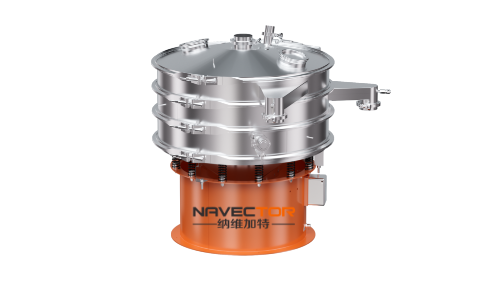
Finally is production scale matching. For continuous production lines with processing capacities exceeding 2 tons per hour, large models equipped with multi-layer screen meshes are recommended, while reserving laser monitoring interfaces for intelligent process control.
If you are struggling with resin powder screening challenges, feel free to call 15601937055 to schedule a free material screening test. Let us redefine screening efficiency with technology and help you stay ahead in the fine chemical industry!
 English
 中文
中文 Español
 ภาษาไทย
 Pусский
 Bahasa Indonesia
 Tiếng Việt