When many companies replace screening machines, their first reaction is often “the capacity is insufficient,” “the screen mesh keeps clogging,” or “the screening accuracy is unstable.” As a result, they start switching to larger motors, higher vibration amplitudes, or even replacing the entire system. However, in actual production, many screening problems are not caused by insufficient equipment power, but by a mismatch between process parameters and material characteristics. Essentially, all of these issues are related to screening machine selection.
I. Many Screening Problems Actually Occur During the “Material Movement” Stage
Screening is not simply about “blocking large particles while letting small particles pass through.” Once powder enters the screen surface, what truly determines screening efficiency is whether particles can contact the screen openings, overturn, stratify, and complete passage through the mesh within a limited amount of time.
For example, in lithium battery cathode and anode materials, fine particles tend to generate static electricity through friction. Static electricity causes powders to attract each other and form slight agglomeration. Even if the particles are smaller than the screen openings, they may still fail to pass through smoothly. Many production sites find that the screen mesh does not appear completely blocked, yet the screening rate drops significantly. This is essentially “false mesh clogging.”
Another example is metal powders and 3D printing powders, which are high-density materials that are more prone to density stratification. Coarse particles settle quickly while fine particles float, eventually leading to disordered screening trajectories and material mixing.
Therefore, screening machine selection should not begin with equipment models, but with an evaluation of the material’s “movement behavior” on the screen surface.
II. Several Common Misconceptions in Screening Machine Selection
Many companies easily fall into the mindset that “bigger parameters are always better.”
For example, some users believe that stronger vibration means higher screening efficiency. However, for ultrafine powders, excessive amplitude can actually destroy particle stratification. Materials continuously bounce on the screen surface without stably contacting the mesh openings, eventually resulting in a situation where “the material moves quickly, but screening cannot be completed effectively.”
Some users only focus on mesh size while ignoring particle size distribution. In reality, even for the same 300-mesh powder, the screening difficulty can vary significantly depending on the material. The more concentrated the particle size distribution, the easier it is to achieve precise classification; meanwhile, materials with wide particle size distribution are more likely to cause mesh clogging and entrainment.
Another common issue is ignoring continuous operation conditions.
Many screening tests only run for more than ten minutes, while actual production often requires continuous operation for over 8 hours. After long-term operation, temperature rise, humidity changes, and static electricity accumulation all affect the screening condition. Some equipment performs normally at startup, but efficiency continuously decreases later. Essentially, this is caused by insufficient self-cleaning capability of the screen surface.
This is also why ultrasonic vibrating screens, ultrasonic tumbler screens, and negative pressure airflow screens have become increasingly popular in recent years. Many industries are not simply pursuing higher output, but rather solving the problem of “continuous and stable screening.”
III. How Should Screening Machines Actually Be Selected?
Essentially, screening machine selection is not about “choosing an equipment model,” but about finding the most suitable screening method for material movement under different process conditions.
1.First is material characteristics.
Whether the powder tends to agglomerate, carries static electricity, has regular particle shapes, or maintains stable bulk density will all directly affect screening conditions. Lightweight powders such as graphite, carbon powder, and resin powder easily generate static electricity during screening due to friction, causing slight particle attraction. Even when particle sizes are smaller than the mesh openings, they may still fail to pass through smoothly. Meanwhile, metal powders and high-density materials are more prone to rapid settling, resulting in uneven stratification on the screen surface.
If the material itself has poor flowability or obvious agglomeration, simply increasing vibration force is often ineffective. Under such conditions, ultrasonic vibrating screens or ultrasonic tumbler screens are usually more suitable, as high-frequency micro-vibration reduces particle adhesion and mesh clogging probability.
2.The second factor is production capacity requirements.
During production expansion, many companies tend to overlook screen surface utilization. Some equipment may have high theoretical processing capacity, but during actual operation, materials only concentrate in localized areas of the screen mesh, meaning the effective screening area is actually quite limited.
For example, tumbler screens use low-speed three-dimensional tumbling motion, allowing materials to spread evenly across the entire screen surface and increasing particle retention time. Therefore, they are more suitable for high-capacity, high-precision classification applications. Conventional vibrating screens, on the other hand, are more suitable for small-to-medium capacity and rapid separation scenarios.
If the production line requires continuous 24-hour operation, it is also necessary to focus on long-term operational stability, including screen mesh lifespan, temperature rise, dust control, and maintenance frequency.
3.The third factor is screening mesh size, or particle size requirements.
Generally speaking, the higher the mesh size, the greater the screening difficulty. Especially beyond 200 mesh, many powders are no longer dealing with simple “particle passage” issues, but rather adhesion, friction, and static electricity between particles and the screen mesh.
Ultrafine powders have very limited effective mesh-passing time on the screen surface. If particles cannot stratify quickly enough, mesh clogging or false blocking will easily occur. Therefore, high-mesh screening depends more on equipment motion trajectory and mesh cleaning capability rather than vibration strength alone.
For ultrafine powders ranging from 20μm to 300μm, many industries adopt ultrasonic screening technology by superimposing high-frequency, low-amplitude vibration waves onto the screen mesh, keeping powders in a micro-suspension state and reducing adhesion and wedging blockage.
4.The fourth factor is material moisture content and temperature.
Many screening problems are actually caused by environmental changes.
For example, food additives, chemical powders, and lithium battery materials may develop slight surface moisture absorption when air humidity increases, causing rapid mesh blinding. Especially when moisture content approaches the critical point, material flowability decreases significantly.
Some high-temperature materials may also soften, agglomerate, or even develop thermal adhesion during screening. If equipment sealing is insufficient or screen surface heat dissipation is poor, mesh clogging will become increasingly severe.
Therefore, for conditions involving high moisture content or obvious temperature changes, priority should usually be given to screen self-cleaning capability, sealing structure, and continuous operational stability. Some lightweight powders may also use negative pressure airflow screens to reduce material accumulation through airflow conveying.
5.The final factor is environmental compatibility.
This point is often the most overlooked.
For example, some pharmaceutical, food, and new energy material workshops have extremely strict requirements regarding dust leakage, metal contamination, and cleaning dead corners. Meanwhile, some flammable and explosive powders also involve explosion-proof ratings and static electricity control.
If only screening efficiency is considered while ignoring the production environment, later problems such as difficult maintenance, complicated cleaning, or even production safety risks may arise.
Therefore, truly mature screening machine selection does not begin by asking “which machine should we buy,” but by first clarifying whether the material will agglomerate, absorb moisture, generate heat, or carry static electricity under real operating conditions, and whether the application requires “rapid screening” or “stable classification.” Only after these process conditions are fully understood can the appropriate equipment type become truly clear.
IV. Which Screening Machines Are More Suitable for Different Operating Conditions?
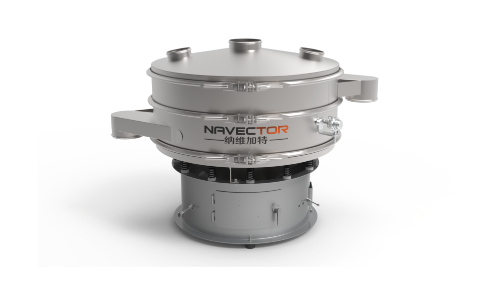
1.Ultrasonic vibrating screens are more suitable for ultrafine powder precision screening, especially for highly adhesive, high-static, and easily agglomerating materials. They are widely used in industries such as lithium battery materials, metal powders, silicon micropowder, graphite, and resin powders.
2.Tumbler screens are more oriented toward high-precision and high-capacity particle classification, especially for applications requiring high particle uniformity, such as food additives, chemical granules, and plastic pellets.
3.Ultrasonic tumbler screens combine both technologies, retaining the large-area, low-damage screening advantages of tumbler screens while adding ultrasonic mesh cleaning capability, making them more suitable for high-capacity fine powder screening.
4.Negative pressure airflow screens are more suitable for lightweight powders, ultrafine powders, and materials that are prone to floating. Some non-metallic powders, lightweight additives, and ultrafine chemical powders commonly use this solution.
5.Small particle screening machines specially designed for the lithium battery industry are more focused on continuous fine particle screening applications ranging from 20μm to 300μm, primarily solving mesh clogging and stability issues under high-precision screening conditions.
Many screening problems are not caused by “inability to screen,” but because the particles are not moving across the screen surface in the correct way. Only by understanding the relationship between material characteristics, movement trajectories, and mesh clogging mechanisms can screening machine selection move beyond the stage of simply “changing equipment to see if it works.”
 English
 中文
中文 Español
 ภาษาไทย
 Pусский
 Bahasa Indonesia
 Tiếng Việt