In the biopharmaceutical field, the processing of sustained-release microsphere slurry is facing three major challenges: microspheres are prone to agglomeration, resulting in low screening efficiency; traditional screens clog frequently, affecting production capacity; and sterile environments are difficult to maintain throughout the process. This article takes the technical logic of the microsphere sieve as a starting point to analyze how it breaks through these processing bottlenecks in microsphere slurry applications.
I. What Is the Working Principle of This Equipment?
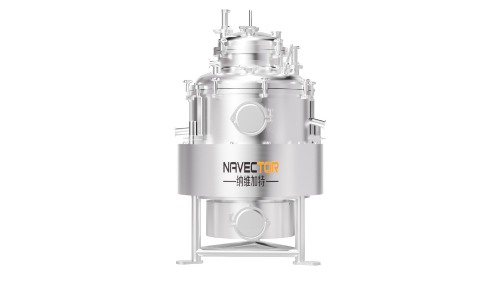
The microsphere sieve adopts negative-pressure airflow-driven dynamic screening technology. By connecting a vacuum cleaner to the screening chamber, a pressure gradient of -0.1 to 0.3 MPa is formed. After the microsphere slurry enters the screening system, the high-speed airflow released by the rotating nozzle drives the material to move in a spiral motion across the screen surface. Taking the PLGA microsphere processing of a biopharmaceutical company as an example, the equipment completed a screening process originally requiring 2 hours within just 30 minutes through the combined action of centrifugal force and airflow, while achieving screening precision down to 3 μm. It is worth noting that the built-in ultrasonic vibration module continuously eliminates electrostatic adsorption on the screen surface, a feature that is especially important when processing low-density PLLA microspheres.
II. Why Can It Solve the Agglomeration Problem?
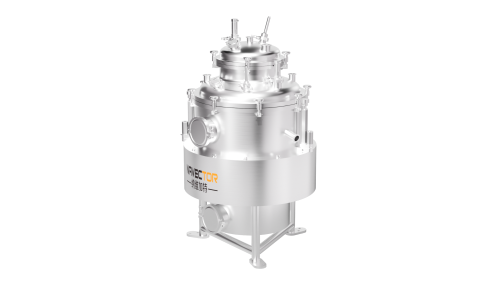
To address the common agglomeration phenomenon of sustained-release microspheres, the equipment achieves deagglomeration through three mechanisms. First, under the action of airflow shear force, the van der Waals forces between microsphere particles are effectively broken. Second, the pulsating flow field generated by the three-dimensional vibration of the screen surface promotes non-uniform movement of the microsphere clusters. Finally, the customized screen aperture distribution design plays a key role. Taking a three-layer Japanese imported filter sheet as an example, the aperture gradually transitions from 80 μm to 20 μm, forming a stepwise deagglomeration path of "coarse screening - fine screening - filtration." Actual test data from a medical aesthetics company showed that when processing PCL microsphere slurry, the deagglomeration rate increased to 98%, while the final product fluidity met the USP<41> standard.
III. Who Needs This Equipment Most?
The core target users of this equipment include three categories: 1) chromatography filler manufacturers whose silica gel/polymer microspheres require precise classification; 2) drug-loaded microsphere R&D institutions with strict particle size distribution requirements for polymer microspheres such as PLGA and PLA; and 3) medical aesthetics raw material suppliers that process implant-grade microspheres such as PLLA and PCL. According to feedback from a diagnostic reagent company, when processing fluorescent microspheres, the equipment not only achieved a breakage rate below 0.3%, but also shortened sterilization validation time to one-third of traditional steam sterilization through its SIP function.
IV. Which Production Stages Can Use This Equipment?
The equipment runs through the entire microsphere production process. During the pretreatment stage, it can perform preliminary classification and impurity removal for microsphere slurry. In the intermediate purification stage, it supports multi-stage washing operations and achieves rapid solid-liquid separation through negative-pressure filtration. In the final formulation stage, it can complete drying and sterile packaging. Taking a certain embolic microsphere manufacturer as an example, the company integrated six originally separate devices, including centrifuges and vacuum drying ovens, through this equipment, reducing production line floor space by 40% and lowering energy consumption by 28%.
V. Under What Working Conditions Is It More Effective Than Traditional Sieves?
The equipment performs particularly well in three special scenarios. First, when processing temperature-sensitive microspheres, such as protein-loaded microspheres, the equipment can precisely control temperature within 30-80°C through its hot air circulation system. Second, during the screening of high-viscosity slurry, the fully enclosed system combined with a vacuum degree of 0.2 MPa can achieve a continuous processing capacity of 5 kg per hour. Third, in applications with stringent sterile requirements, the equipment successfully passed FDA on-site inspections through the use of 316L stainless steel material (Ra < 0.4 μm) and CIP/SIP functions. A chromatography filler manufacturer reported that when processing silica microspheres, the cross-contamination rate was reduced below the detection limit.
VI. How to Choose the Right Model for Your Material?
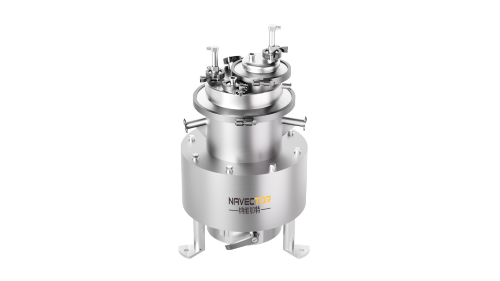
Model selection should comprehensively consider three factors. First is processing scale. For laboratory-stage applications, a compact model with a 3.55 L working chamber is recommended, capable of handling 0.1-0.7 kg per batch. For pilot-scale production, a 14.5 L medium-sized model is recommended, balancing a processing capacity of 1-1.5 kg with flexible screen configurations (20-500 μm apertures optional). For industrial-scale production, a 30.5 L large-scale model is required, supporting continuous operation of 10 kg per batch. Second is process complexity. If multi-stage washing and drying are involved, a version integrated with a hot air system should be selected. Third is cleanliness requirements. For GMP workshop applications, explosion-proof motors and fully stainless-steel electrical control cabinets are recommended. During model selection, a cell culture matrix manufacturer determined the necessity of a three-layer screen configuration through simulated working-condition testing, ultimately increasing product yield by 12 percentage points.
Want to obtain a customized solution for your material? Call 15601937055 now. We provide free material testing services. Let the microsphere sieve help you break through process bottlenecks and achieve an upgraded transformation from slurry to high-quality products!


 English
 中文
中文 Español
 ภาษาไทย
 Pусский
 Bahasa Indonesia
 Tiếng Việt