Ceramic powder is an important raw material for advanced structural ceramics and functional ceramics. It directly affects the performance consistency of downstream products such as electronic components, new energy insulating parts, and wear-resistant components, and is also an important basic powder material in the new materials field.
Ultrafine ceramic powder is prone to problems such as agglomeration, screen clogging, and unclear classification during the screening process. The finer the powder, the higher the requirements for the equipment's vibration mode, screen performance, and parameter adjustment capabilities. When processing ultrafine powder, traditional screening equipment may experience reduced screening efficiency and insufficient capacity, making it difficult to achieve both precision and capacity at the same time.
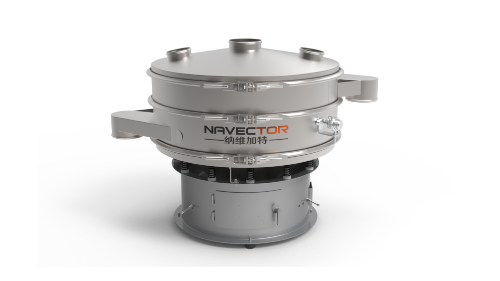
The high-speed sieve is a type of fine screening equipment developed specifically for screening ultrafine powders with a D50 particle size below 1 μm. It adopts low-frequency, high-speed vibration technology and uses a 0–3000 rpm stepless speed adjustment system to change operating parameters, providing another screening approach for difficult-to-screen materials such as ultrafine ceramic powder.
I. Analyzing the Challenges: Where Exactly Does Ceramic Powder Screening Get Stuck?
The core challenge of screening ultrafine ceramic powder lies in the matching between material characteristics and screening methods.
First is the fine particle size. For ultrafine powders with a D50 particle size below 1 μm, traditional screening equipment may experience reduced screening efficiency and unclear classification during operation. The product specifications of the high-speed sieve are specifically designed for ultrafine powders with a D50 particle size below 1 μm, identifying screen clogging, poor classification, and insufficient capacity as key issues to be improved.
The second issue is agglomeration. Ceramic powder may form agglomerates during actual production. The screening equipment needs to sufficiently disperse the material on the screen surface to improve the screening efficiency of fine powder. If the screening conditions are not ideal, agglomerates may affect the classification results, resulting in fluctuations in particle size distribution.
Another easily overlooked issue is capacity. Ultrafine powder screening often needs to balance screening accuracy and processing capacity. The equipment operating parameters, screen performance, and material conditions need to achieve an appropriate match. Otherwise, simply pursuing higher screening accuracy can easily come at the expense of processing efficiency.
Therefore, the real difficulty in screening ultrafine powder lies not in getting the powder onto the screen, but in keeping the material in a suitable screening state throughout the process.
II. Principle Breakdown: How Does the High-Speed Sieve Improve Ultrafine Powder Screening?
The high-speed sieve adopts low-frequency, high-speed vibration technology. Through a 0–3000 rpm stepless speed adjustment system, the operating speed can be adjusted according to different material characteristics, allowing the material to disperse rapidly on the screen surface and pass through the screen efficiently. The equipment also retains the classic flower-disc adjustment structure for further adjustment of the screening conditions, thereby balancing screening accuracy and processing capacity.
This design primarily addresses the problems of screen clogging and poor classification that are common with ultrafine powders. By optimizing the material movement trajectory and screening conditions, the high-speed sieve improves the screening efficiency and classification accuracy of ultrafine powders. For materials such as ceramic powder that require fine classification, the equipment parameters can be adjusted according to specific material characteristics rather than being fixed at a single operating condition.
Capacity is also an important design focus of the high-speed sieve. It adopts low-frequency, high-speed vibration technology to improve processing capacity while maintaining screening accuracy. Its capacity can reach 5 times that of ordinary screening machines and 3 times that of traditional small-particle screening machines.
For the screen section, the high-speed sieve is equipped with a dedicated Magenite screen, featuring high tension, high wear resistance, and high screening efficiency. Its tensioning force can reach 50 N, and its service life is 2–3 times that of ordinary screens. For ultrafine powders, the screen itself is an important factor affecting screening stability, and screen performance needs to be matched with the equipment's vibration conditions.
From these aspects, the core problems addressed by the high-speed sieve are relatively clear: through the combination of high-speed vibration, flexible speed adjustment, and high-performance screening mesh, it improves issues such as screen clogging, poor classification, and insufficient capacity when screening ultrafine powders.
III. Production Line Implementation: What Should Be Considered When Screening Ultrafine Ceramic Powder?
Ceramic powder screening should not be evaluated based solely on equipment parameters. It is also necessary to consider the actual particle size range, agglomeration condition, and final classification requirements of the material.
First are the operating parameters. The high-speed sieve supports 0–3000 rpm stepless speed adjustment, allowing the operating speed to be adjusted according to different material characteristics. For ultrafine ceramic powder, actual screening tests should be conducted to determine suitable operating parameters rather than simply pursuing a high rotational speed.
Next is the screen. The high-speed sieve is equipped with a dedicated Magenite screen, with a tensioning force of up to 50 N, featuring high tension, high wear resistance, and high screening efficiency. Its service life is 2–3 times that of ordinary screens. Screen selection needs to match the target particle size and specific screening requirements rather than focusing solely on mesh size.
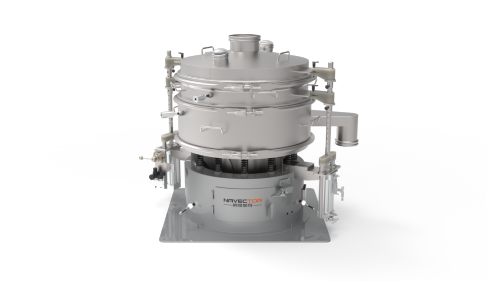
If the production line already uses a small-particle screening machine, the possibility of equipment upgrading can also be considered. The high-speed sieve supports the upgrading and modification of existing small-particle screening machines without replacing the entire machine. The upgrade can be completed by replacing the stepless speed adjustment motor and control system. For production lines with existing equipment, this approach can reduce the investment associated with replacing the entire machine.
As for the specific mesh size, operating speed, and equipment specifications, these need to be determined based on the actual particle size and capacity requirements of the ceramic powder.
IV. Selection Decisions: Which Parameters Should Be Prioritized When Selecting a High-Speed Sieve?
When selecting a high-speed sieve, it is not enough to focus on rotational speed alone.
First, check whether the equipment is genuinely designed for ultrafine powders.
The high-speed sieve is specifically designed for screening ultrafine powders with a D50 particle size below 1 μm, mainly targeting issues such as screen clogging, poor classification, and insufficient capacity.
Second, look at the adjustment capabilities.
The 0–3000 rpm stepless speed adjustment system allows the operating speed to be flexibly adjusted according to different material characteristics, which is important for screening powders with significant differences in material conditions.
Third, check the screen configuration.
The dedicated Magenite screen features high tension, high wear resistance, and high screening efficiency. Its tensioning force can reach 50 N, and its service life is 2–3 times that of ordinary screens.
Fourth, look at the actual screening results.
For ceramic powder, it is recommended to conduct actual material testing before determining the equipment. Through testing, observe the screening accuracy, classification performance, processing capacity, and operating stability, and then determine the specific equipment parameters.
If the existing production line already uses a traditional small-particle screening machine, an upgrade solution can also be considered. The high-speed sieve supports the modification of existing small-particle screening machines. The upgrade can be completed by replacing the stepless speed adjustment motor and control system, without directly replacing the entire machine.
V. Conclusion: The Finer the Ultrafine Ceramic Powder, the More Precise the Screening Equipment Matching Needs to Be
Screening ultrafine ceramic powder tests the equipment's ability to adapt to material conditions. The finer the particle size, the more easily problems such as agglomeration, screen clogging, and poor classification can be amplified. Relying solely on traditional screening methods makes it difficult to balance screening accuracy and processing capacity.
Starting with low-frequency, high-speed vibration technology, the high-speed sieve uses configurations such as 0–3000 rpm stepless speed adjustment, flower-disc adjustment, and a dedicated Magenite screen. It is optimized for the screening requirements of ultrafine powders with a D50 particle size below 1 μm, focusing on improving issues such as screen clogging, poor classification, and insufficient capacity.
For ultrafine powders such as ceramic powder, equipment selection ultimately needs to return to the material itself. First clarify the particle size, agglomeration condition, and target classification requirements, then determine the operating parameters and screen configuration through actual screening tests. This often provides more useful reference value than simply comparing equipment parameters.


 English
 中文
中文 Español
 ภาษาไทย
 Pусский
 Bahasa Indonesia
 Tiếng Việt