In industries such as lithium battery materials, pharmaceuticals, food additives, and fine chemicals, “mesh blinding” is one of the most common and persistent problems in the screening process.
Once mesh blinding occurs, it not only leads to a sharp drop in screening efficiency, reduced output, and loss of classification accuracy, but also triggers a series of chain problems such as increased equipment load and accelerated screen damage.
In practical engineering, mesh blinding is not simply “screen apertures being blocked,” but rather the combined result of mismatches among material behavior, equipment motion, and process parameters.
This article systematically analyzes the root causes of mesh blinding in screening machines and provides executable engineering solutions ranging from parameter optimization to structural upgrades.
Table of Contents
Problem Definition
Cause Analysis
Solutions
Operation Guide
Preventive Maintenance Strategies
Common Errors and Risks
Technology Optimization Trends
FAQ
About Navector
I. Problem Definition
Mesh blinding in screening machines usually manifests in the following forms:
Screen apertures blocked by particles (plugging): particle size close to aperture size
Screen surface covered by material (blinding): high-viscosity or moist materials adhere
Electrostatic adsorption blinding: ultrafine powders adhere to the screen surface
Sudden drop in screening efficiency: while equipment operates normally
Typical working conditions:
10–100 μm ultrafine powder screening
High-humidity or oily material screening
Lithium battery cathode materials (prone to agglomeration and static electricity)
II. Analysis of Mesh Blinding Causes
Multi-dimensional root cause breakdown
|
Problem Phenomenon |
Root Cause |
Mechanism |
|
Aperture plugging |
Particle size close to aperture |
Particles embed into apertures causing mechanical blockage |
|
Surface adhesion |
High moisture or high viscosity |
Material adheres forming a covering layer |
|
Electrostatic adsorption |
Charged ultrafine powders |
Powders adhere to the screen surface |
|
Severe local blinding |
Uneven feeding |
Local accumulation leads to blockage |
|
Ineffective cleaning |
Mismatched vibration parameters |
Material fails to detach from the screen surface |
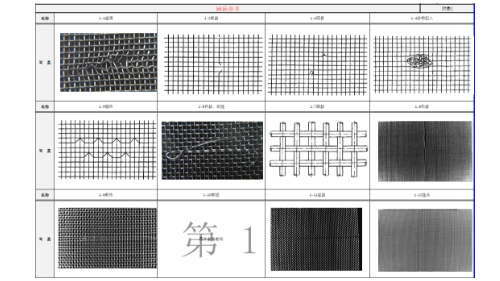
Equipment Structural Factors
Single vibration trajectory → insufficient material movement
Inadequate cleaning devices → inability to continuously clean the screen surface
Uneven screen tension → local areas prone to blockage
Essence: lack of “self-cleaning capability” of the screen surface
Material Property Factors
High viscosity (e.g., food additives)
High moisture content
Narrow particle size distribution
Essence: materials tend to form “bridging” and “adhesion”
Process Parameter Factors
Low frequency → material not easily loosened
Insufficient amplitude → unable to break agglomerates
Excessive feed rate → screen surface overload
Essence: insufficient screening energy
Operation and Maintenance Factors
Failure to clean the screen surface in time
Long-term continuous operation without inspection
Improper screen selection
Essence: inadequate operational management
III. Solutions
General Engineering Solutions
(1) Optimize screen selection
Avoid aperture size close to particle size
Select appropriate weaving methods (e.g., anti-blinding mesh structures)
(2) Control material condition
Reduce moisture content
Pre-treat agglomerated materials (e.g., crushing)
(3) Adjust process parameters
Increase vibration frequency
Increase amplitude
Control feed uniformity
(4) Add screen cleaning devices
Bouncing ball cleaning
Mechanical tapping devices
Navector Engineering Optimization Solutions
(1) For “electrostatic blinding of ultrafine powders”
When handling 10–100 μm powders, conventional vibrating screens tend to cause powder adhesion on the screen surface due to electrostatic forces and van der Waals forces.
Conventional methods such as reducing feed rate or manual cleaning have limited effectiveness.
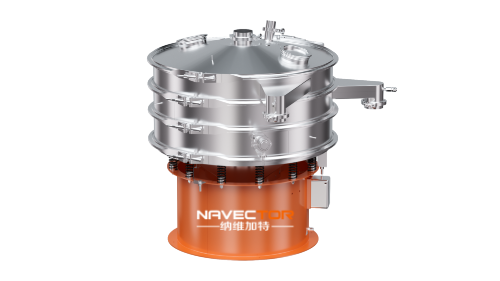
In engineering practice, by superimposing high-frequency, low-amplitude ultrasonic vibration, powders can be maintained in a suspended state, effectively suppressing adhesion, friction, and embedding, and significantly enhancing the self-cleaning capability of the screen.
(2) For “blinding caused by viscous materials”
For high-viscosity or oily materials, a single conventional vibration mode cannot effectively disperse agglomerates.
By optimizing the motion trajectory of the screening machine, materials can form three-dimensional rolling and diffusion motion on the screen surface, effectively reducing accumulation and increasing the probability of passing through the screen, thereby reducing the risk of blinding at the source.

(3) For “blinding under high load conditions”
When the screen surface is overloaded, the material layer becomes thicker, making it difficult for fine particles to contact the screen.
By optimizing the screening structure to enable rapid dispersion and stratification of materials, screening efficiency can be significantly improved and mesh blinding reduced.
(4) For “blinding in continuous production”
In continuous production scenarios, manual cleaning is not feasible.
Adopting screening system designs with continuous cleaning capabilities, such as ultrasonic systems or optimized vibration modes, enables long-term stable operation and reduces downtime.
IV. Key Operating Steps
Mesh blinding handling procedure
|
Step |
Key Actions |
Risk Notes |
|
1 |
Stop the machine and cut off power |
Prevent accidental operation |
|
2 |
Open the machine and inspect the screen surface |
Pay attention to dust protection |
|
3 |
Remove blocked materials from apertures |
Avoid damaging the screen |
|
4 |
Check material condition |
Determine whether pre-treatment is required |
|
5 |
Adjust vibration parameters |
Avoid over-adjustment |
|
6 |
Trial run and observe |
Confirm whether the issue is resolved |
V. Preventive Maintenance Strategies
Routine maintenance
Observe whether there is accumulation on the screen surface
Monitor changes in screening efficiency
Periodic maintenance
Inspect cleaning devices
Calibrate vibration parameters
Long-term optimization
Optimize screen selection
Upgrade screening systems
Core principle: preventing mesh blinding is better than handling it
VI. Common Errors and Risks
|
Incorrect Operation |
Consequence |
|
Blindly increasing amplitude |
May damage the screen |
|
Ignoring material moisture |
Continuous blinding |
|
Incorrect screen selection |
Long-term unresolved issues |
|
Relying on manual cleaning |
Low efficiency and instability |
VII. Technology Optimization and Development Trends
Ultrasonic screening technology: solves ultrafine powder blinding
Multi-dimensional motion screening: improves material distribution
Intelligent monitoring systems: real-time detection of blinding trends
Automatic cleaning systems: enables unmanned operation
VIII. Frequently Asked Technical Questions (FAQ)
Q1: What is the most common cause of mesh blinding in screening machines?
A: Particle size close to the aperture size and material adhesion are the primary causes.
Q2: What happens if the machine continues running after blinding occurs?
A: It will lead to reduced screening efficiency and may cause screen damage.
Q3: How to quickly determine whether mesh blinding has occurred?
A: Observe a drop in output or material accumulation on the screen surface.
Q4: Can ultrasonic screening really solve mesh blinding?
A: It is highly effective for ultrafine powders and materials with high static electricity.
IX. About Navector (About Navector)
Navector focuses on technological innovation in the field of fine screening. Its products include ultrasonic vibrating screens, tumbler screens, and various screening system solutions, widely used in lithium battery materials, pharmaceuticals, food, and new materials industries. Through continuous optimization of screening structures, motion modes, and system integration, Navector is committed to providing customers with high-precision, stable, and reliable screening engineering solutions.

 English
 中文
中文 Español
 ภาษาไทย
 Pусский
 Bahasa Indonesia
 Tiếng Việt