With the rapid development of metal additive manufacturing technology, the application of metal powder materials continues to expand in fields such as medical devices, automotive manufacturing, and high-end equipment. As the core raw material of the 3D printing process, the physical properties and chemical stability of metal powders directly determine the quality of the final formed parts.
In actual production processes, metal powders typically undergo multiple stages such as recovery, screening, storage, and reuse. However, due to their small particle size, large specific surface area, and high surface activity, they are highly prone to oxidation once exposed to air.
Once oxidation occurs, it often leads to a series of adverse effects:
Decreased powder flowability
Changes in particle size distribution
Reduced density of printed parts
Degradation of mechanical properties
Lower powder recycling efficiency
Therefore, in the handling of metal 3D printing powders, how to effectively suppress oxidation during screening and recycling has become a key technical issue that urgently needs to be addressed in the additive manufacturing industry.
Table of Contents
The Importance of Screening in 3D Printing Powders
Causes of Oxidation in Metal Powders
Key Technical Challenges in 3D Printing Powder Handling
Navector Oxygen-Free Circulation Screening Solution
Recommended Equipment: 3D Printing Additive Recycling System
Process Optimization Suggestions
Powder Handling Recommendations
Equipment Maintenance Suggestions
Future Trends in Powder Handling Technology
Frequently Asked Technical Question
About Navector Screening Technology
I. The Importance of Screening in 3D Printing Powders
In the metal 3D printing process, screening is a critical step to ensure powder quality and printing stability. Through screening, oversized, undersized, and agglomerated particles can be removed, ensuring that the particle size distribution meets process requirements, thereby improving powder spreading uniformity and forming quality. At the same time, screening is also an important control method in powder recycling and reuse, helping to improve material utilization and reduce production costs.
Typically, printing powders are required to meet the following particle size distribution requirements:
|
Parameter |
Requirement |
|
Particle size range |
Typically 15μm–53μm |
|
Particle size distribution |
Narrow distribution |
|
Sphericity |
High sphericity |
|
Oxygen content |
Strictly controlled |
|
Impurity content |
Extremely low |
In actual production, the remaining powder after printing often contains partially melted particles, spatter particles, agglomerated particles, and oxidized particles. If these particles re-enter the printing system, they may lead to uneven powder spreading, unstable melt pools, and printing defects.
Therefore, screening equipment plays an important role in the powder circulation system:
Removal of oversized particles
Maintaining stable particle size distribution
Improving powder reuse rate
Ensuring stability of the printing process
An efficient and stable screening system is a key technical link to ensure the recycling of metal powders.
II. Causes of Oxidation in Metal Powders
Oxidation of metal powders is usually related to material properties and the production environment.
Fine particle size
3D printing powders are typically in the tens of microns range. The smaller the particle size, the higher the surface atomic activity, making them more likely to react chemically with oxygen.
Exposure to air
In traditional powder recovery processes, powders are often recovered and screened in an air environment, increasing the opportunity for oxygen contact.
Reactive metal materials
Metals such as aluminum and titanium have high chemical activity and can react with oxygen even at room temperature.
High powder temperature
Residual powder temperature is relatively high after printing, making oxidation more likely under elevated temperature conditions.
III. Key Technical Challenges in 3D Printing Powder Handling
In metal additive manufacturing powder circulation systems, the following key issues usually need to be addressed.
Oxygen content control
For high-end materials such as titanium alloys, powder oxygen content must be strictly controlled, otherwise material performance will be affected.
Powder safety management
Metal powders have certain flammability and explosion risks and must be handled in a safe environment.
Powder circulation efficiency
Insufficient screening efficiency will lead to reduced powder recovery efficiency.
Level of automation
Traditional manual handling methods are not only inefficient but also increase the risk of powder contamination.
IV. Navector Oxygen-Free Circulation Screening Solution
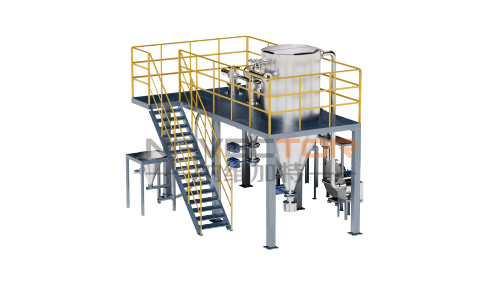
To address the oxidation problem of 3D printing powders, Navector has developed an oxygen-free circulation screening system that integrates powder recovery, screening, and recycling.
The system adopts a sealed structure design and controls the internal oxygen content through an inert gas environment, ensuring that the powder handling process is always in a low-oxygen environment.
Key features of the system include:
Fully sealed structural design
The equipment adopts a fully enclosed structure to prevent powder from contacting external air.
Inert gas protection environment
The system is filled with argon or nitrogen, ensuring that the powder is always in a low-oxygen environment.
Automated recycling
Qualified powders after screening are automatically transferred to the powder feeding system for reuse.
Continuous screening operation
The equipment can be integrated with 3D printing equipment to achieve continuous powder processing.
Through this system, powder oxidation can be effectively reduced, and powder recycling efficiency can be improved.
V. Recommended Equipment: 3D Printing Additive Recycling System
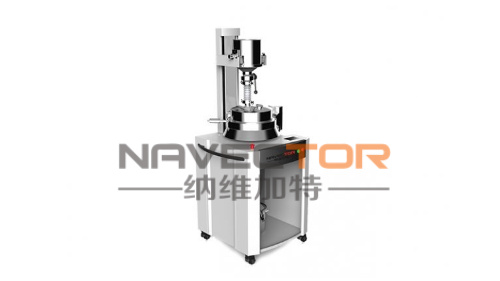
To meet the needs of metal 3D printing powder recovery and screening, Navector has developed a 3D printing additive recycling system. This system is specifically designed for powder recovery and reuse in metal additive manufacturing processes.
|
System Module |
Technical Function |
|
Sealed recovery module |
Recovers residual powder after printing |
|
Inert gas protection system |
Controls oxygen content in the system |
|
Precision sieving module |
Removes large particles and impurities |
|
Automatic conveying system |
Transports powder to the storage unit |
|
Powder refill system |
Returns qualified powder back into the printing equipment |
System advantages include:
Operation in a fully sealed inert gas environment
Continuous screening without interrupting printing equipment operation
Automatic powder recovery and refill
Reduced powder loss
Avoidance of manual powder contact
VI. Process Optimization Suggestions
To further reduce the risk of powder oxidation, it is recommended to consider the following points in process design:
Control powder exposure time
Minimize air exposure time during powder recovery and screening.
Establish an inert gas environment
Key processes should be carried out under inert gas protection.
Control powder temperature
High-temperature powders should be properly cooled before recovery.
Optimize powder conveying methods
It is recommended to use a sealed conveying system to reduce powder leakage.
VII. Powder Handling Recommendations
During the handling of 3D printing powders, operators should follow these principles:
Maintain system sealing
Reduce unnecessary equipment opening
Regularly monitor system oxygen content
Standardize powder handling procedures
These measures help stabilize the production process.
VIII. Equipment Maintenance Suggestions
To ensure long-term stable operation of the system, regular maintenance is recommended:
Regularly inspect sealing structures
Prevent gas leakage that may increase oxygen content.
Clean the screening system
Prevent powder residue from affecting screening efficiency.
Check the gas system
Ensure stable supply of inert gas.
Regularly calibrate sensors
Ensure accurate oxygen content monitoring.
IX. Future Trends in Powder Handling Technology
With the continuous development of the additive manufacturing industry, powder handling technology is also evolving.
Future trends mainly include:
Fully automated powder circulation systems
Intelligent oxygen content monitoring
Unmanned powder handling systems
High-precision screening technology
Digital production management
These technologies will further improve powder utilization and reduce production costs.
X. Frequently Asked Technical Questions
XI. About Navector Screening Technology
Navector (Shanghai) Screening Technology Co., Ltd. focuses on the R&D and manufacturing of fine powder screening equipment. Its products include ultrasonic vibrating screens, tumbler screens, and various powder handling systems. These products are widely used in industries such as lithium battery materials, pharmaceuticals, food, metal powders, and fine chemicals.
With extensive experience in powder engineering, Navector is committed to providing industrial customers with stable, efficient, and precise screening solutions.
 English
 中文
中文 Español
 ภาษาไทย
 Pусский
 Bahasa Indonesia
 Tiếng Việt