In the production process of lithium battery materials, graphite powder screening is one of the key process steps that affects product quality stability.
Many companies tend to focus more on grinding equipment and raw material quality during the initial construction of the production line, but in actual production they often find that:
Even if the grinding particle size has already reached the target range, the product may still experience particle size distribution fluctuations and reduced batch consistency.
In most cases, the root cause of such problems is not grinding, but insufficient precision in the graphite screening process.
As the lithium battery industry continues to raise its requirements for material consistency, more and more companies are beginning to adopt micron-level screening technology for precise classification of graphite powder to ensure stable particle size distribution.
Today, we will use the logic engineers are most familiar with: What / Why / Who / When / Where / How
to clearly explain graphite powder screening.
At the same time, we will also discuss:
The basic principles of graphite powder screening
Why micron-level screening technology is required
The core requirements for graphite screening in the lithium battery industry
The selection principles for graphite powder screening equipment
I. What: What Is Micron-Level Graphite Powder Screening
Micron-level graphite screening refers to a high-precision classification process for graphite particles with particle sizes ranging from 10 μm to 300 μm.
In lithium battery material systems, the particle size ranges of different types of graphite materials are usually as follows:
Graphite Material Type Typical Particle Size Range
Lithium battery anode graphite 10–30 μm
Synthetic graphite 15–50 μm
Conductive graphite powder 20–80 μm
However, in actual production, the particle sizes of powders are not completely uniform, but instead show a certain particle size distribution structure.
For example, a typical particle size test report:
D10: 12 μm
D50: 22 μm
D90: 45 μm
This means that in the same batch of graphite powder there may simultaneously exist:
Fine particles below 10 μm
Main particles around 20 μm
Coarse particles above 50 μm
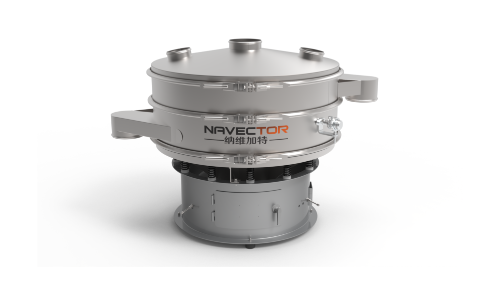
If there is no high-precision graphite powder screening equipment for classification, large particles and agglomerated particles may directly enter the product system, thereby affecting material performance.
II. Why: Why Does Graphite Screening Require Micron-Level Technology
Graphite powder has obvious powder engineering characteristics, which is also the main reason why screening is relatively difficult.
From the perspective of material properties, graphite powder usually has the following characteristics:
|
Characteristics |
Impact on Screening |
|
Small particle size |
Requires high-precision mesh screens |
|
Low powder density |
Particles tend to float |
|
High surface energy |
Prone to agglomeration |
In traditional screening equipment, fine graphite particles often encounter the following problems:
Insufficient screening precision
Screen mesh blockage
Low screening efficiency
For example, a lithium battery anode material manufacturer once encountered particle size deviation issues during production.
The production target parameter was: D50 = 22 μm
But the test results were:
D50 = 28 μm
D90 = 60 μm
After process troubleshooting, it was found that the main cause was that agglomerated particles were not effectively removed.
After upgrading to micron-level graphite screening equipment, the particle size distribution returned to:
D50 = 21.8 μm
D90 = 44 μm
The product particle size distribution became significantly more stable.
Therefore, for graphite powder with particle sizes in the tens of microns range, precise classification must be achieved through micron-level screening technology.
III. Who: Which Industries Require Micron-Level Graphite Screening
At present, the industries with high requirements for graphite powder screening precision mainly include the following categories.
1.Lithium battery industry
Lithium battery anode materials have high requirements for particle size consistency, with the common screening range being: 20–50 μm
If the particle size deviation exceeds ±5 μm, it may affect battery cycle performance and consistency.
Therefore, lithium battery companies usually need to configure high-precision graphite powder screening equipment.
2.Conductive materials industry
In conductive graphite powder applications, particle distribution directly affects the conductive network structure.
Too many coarse particles may lead to:
Reduced conductivity
Increased resistivity
Therefore, fine classification through small-particle screening machines is required.
3.New materials industry
For example:
Graphene materials
Carbon nanomaterials
Conductive carbon powder
These materials usually require micron-level powder screening equipment for particle size control.
IV. When: At Which Production Stages Is Micron-Level Graphite Screening Typically Applied
In the graphite powder production process, screening is mainly applied in the following three stages.
1.After grinding
The particle size distribution of powder produced by grinding equipment is usually relatively wide, for example: 5 μm — 80 μm
The main function of screening is to classify particles within the target particle size range.
2.Before finished product packaging
In many production lines, final screening is an important step to ensure stable product quality.
Some companies have found through testing that about 5% of particles had oversized particle issues, mainly due to insufficient screening precision.
3.Powder recovery stage
Recovered powder generated during production often contains: agglomerated particles, coarse particle impurities
Graphite screening equipment can be used to achieve reclassification and reuse.
V. Where: In Which Industries Is Micron-Level Graphite Screening Mainly Applied?
At present, the industries using graphite screening equipment the most include:
|
Industry |
Typical Materials |
|
Lithium battery industry |
Synthetic graphite, natural graphite |
|
New materials |
Graphene, carbon materials |
|
Powder metallurgy |
Graphite lubricants |
|
Conductive materials |
Conductive carbon powder |
Among them, the fastest-growing sector is: the lithium battery anode material industry.
As demand for power batteries increases, the precision requirements for graphite powder screening are also becoming higher and higher.
VI. How: How to Select Graphite Powder Screening Equipment
From the perspective of powder engineering, selecting graphite powder screening equipment usually requires focusing on three key indicators.
Particle size range
If the target screening range is: 20 μm — 300 μm
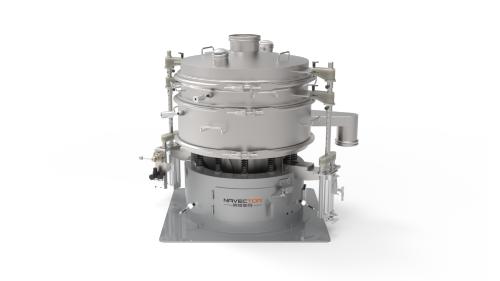
It is usually recommended to use: a small-particle screening machine combined with an ultrasonic screening system
This structure can effectively solve:
Agglomerated particles
Electrostatic adsorption
Screen mesh blockage problems
1.Screening efficiency
In lithium battery material production, the screening efficiency is generally required to reach: 95% — 99%
High-precision micron-level screening equipment can significantly improve fine powder screening efficiency.
2.Production capacity
Traditional screening equipment has relatively low capacity during fine powder screening.
Graphite powder screening equipment developed for the lithium battery industry can usually increase production capacity by: 2 — 4 times under the same equipment size
This is also an important reason why lithium battery material companies are currently upgrading their screening equipment.
VII. Key Parameters in the Graphite Screening Process
During the production process of graphite powder, the following three parameters need to be controlled.
1.Particle size control range
Recommended control range:
D50: 20 — 25 μm
D90: ≤ 45 μm
2.Screen mesh count
Common screen mesh specifications for micron-level graphite screening: 200 mesh — 635 mesh
The specific screen selection needs to be determined according to the target particle size.
3.Anti-clogging technology
Because graphite powder is prone to agglomeration, the following technologies are commonly used during screening:
Ultrasonic screening
Airflow screening
Three-dimensional vibration screening
VIII. FAQ: Common Questions About Graphite Screening
1.Why does graphite powder easily clog the screen mesh?
Because graphite particles are fine, lightweight, and prone to agglomeration.
This is also why many companies need to use ultrasonic micron-level screening technology.
2.What mesh size is generally required for graphite screening?
The common range is: 200 mesh – 635 mesh
The specific selection depends on the target particle size.
3.What is the screening precision for lithium battery anode materials?
Most lithium battery companies require: 20 μm – 50 μm
At the same time, particle size distribution must also be controlled.
Graphite screening is not simply “screening the powder once,” but controlling particle size distribution. In the lithium battery industry, a 10 μm particle size error may mean a difference in the performance of an entire batch of batteries, which is why more and more companies are beginning to adopt micron-level graphite powder screening equipment. This is also one of the important directions for the upgrading of current lithium battery material production lines.
 English
 中文
中文 Español
 ภาษาไทย
 Pусский
 Bahasa Indonesia
 Tiếng Việt