Engineer Wang, Quality Director of a new energy material company, was struggling with a critical screening challenge for sulfide electrolytes. This powder, with an average particle size of 0.8 μm, frequently caused severe screen blockage on traditional screening machines, with a screen lifespan of only 7 days. Until they discovered the Navector High-Speed Screening Machine, this long-standing industry bottleneck was finally overcome.
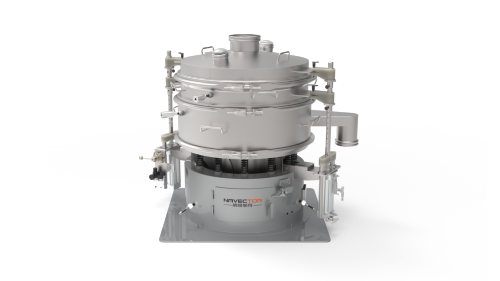
I. What Is the Working Principle of This Equipment?
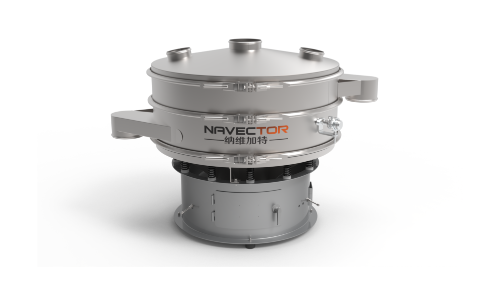
The Navector High-Speed Intelligent Screening Machine is an upgraded product based on ultrasonic small-particle screening technology. It adopts low-frequency high-speed vibration technology combined with a precision screening structure design, specifically developed for ultra-fine powder screening requirements with D50 particle sizes below 1 μm.
During operation, the equipment uses high-speed vibration to rapidly disperse and move powder materials across the screen surface, reducing agglomeration caused by electrostatic forces and adsorption between ultra-fine particles, thereby improving the screening efficiency of fine powders. Meanwhile, with adjustable vibration parameters, the screening condition can be optimized according to different material characteristics, meeting the high-precision screening requirements of conductive agents, lithium battery materials, and other fine powder materials.
Compared with traditional screening equipment, which often suffers from fine powder blockage and declining screening efficiency, the high-speed screening machine integrates ultrasonic screening technology. Through high-frequency micro-vibration, it reduces particle clogging and maintains good screen permeability, enabling continuous and efficient screening of ultra-fine powders.
In applications such as lithium battery materials and advanced powders, the high-speed screening machine provides precise classification for ultra-fine and easily agglomerated materials, improving screening stability and offering a reliable equipment solution for high-quality powder production.
II. Why Can It Solve the Agglomeration Problem?
The difficulty in screening ultra-fine powders is not simply caused by insufficiently small mesh openings. The real challenge lies in particle agglomeration and electrostatic interactions, which prevent fine powders that should pass through the screen from being effectively separated.
The Navector High-Speed Screening Machine adopts low-frequency high-speed vibration technology. By optimizing the movement state of materials on the screen surface, powders can remain continuously dispersed with a higher probability of passing through the mesh, reducing material accumulation and localized screen blockage.
At the same time, combined with high-tension specialized screens and adjustable screening parameters, the equipment can achieve more stable screening performance according to different material characteristics.
For easily agglomerated ultra-fine powders such as conductive agents, ultra-fine lithium iron phosphate (LFP), and solid-state electrolytes, the high-speed screening machine can effectively improve issues such as incomplete screening, poor classification, and reduced production capacity. While maintaining particle size consistency, it enhances continuous production stability.
III. Who Needs This Type of Equipment?
For ultra-fine powder manufacturers, the screening process often determines the consistency and stability of the final product. Especially in industries such as lithium battery materials and advanced powders, materials are continuously developing toward finer particle sizes, while traditional screening equipment faces increasing challenges including agglomeration, screen blockage, and insufficient efficiency.
The Navector High-Speed Intelligent Screening Machine is mainly suitable for the following application scenarios:
1. Lithium Battery Material Companies
For ultra-fine powders such as cathode materials, anode materials, and conductive agents, the equipment can effectively improve fine powder agglomeration and screen blockage issues, enhancing precision classification efficiency.
2. Ultra-Fine Powder Manufacturers
For powders with D50 particle sizes below 1 μm, the high-speed screening machine improves fine particle passing capability through high-speed vibration and ultrasonic screening technology, meeting high-precision screening requirements.
3. R&D and Production Scenarios with High Product Consistency Requirements
During new material development, process validation, and large-scale production, the equipment provides more stable screening performance, helping companies achieve an effective transition from laboratory data to industrial production.
The common requirement across these applications is maintaining screening accuracy while improving equipment continuous operation stability. Through targeted technical design, the Navector High-Speed Intelligent Screening Machine provides a more reliable solution for ultra-fine powder classification.
IV. Which Production Processes Can Benefit From It?
During lithium battery material production, high-speed screening machines are typically applied in several key processes requiring high-precision ultra-fine powder screening:
Raw Material Purification:
Removing coarse particles and foreign materials generated during crushing and transportation to improve raw material purity.
Fine Classification:
Controlling the particle size distribution of ultra-fine powders to ensure product consistency.
Final Product Inspection:
Screening finished products to prevent oversized particles or agglomerated particles from entering downstream processes.
For materials such as conductive agents, ultra-fine lithium iron phosphate, high-nickel cathode materials, and solid-state electrolytes, the high-speed screening machine not only improves screening efficiency but also ensures particle size stability and batch consistency, providing support for subsequent coating, sintering, and battery performance.
V. Under What Conditions Does It Outperform Traditional Screening Machines?
When materials enter the ultra-fine particle stage, traditional screening machines often encounter problems such as screen blockage, particle agglomeration, poor passing efficiency, and reduced production capacity. These are exactly the conditions where high-speed screening technology demonstrates its advantages.
Especially during the screening of ultra-fine powders such as conductive carbon black, CNT conductive agents, ultra-fine lithium iron phosphate, high-nickel cathode materials, and solid-state electrolytes, the high-speed screening machine improves fine particle passing efficiency through low-frequency high-speed vibration and adjustable motion trajectory design, while reducing material accumulation and screen blockage.
For powders with small particle sizes, strong electrostatic properties, high agglomeration tendency, and poor flowability, the advantages of high-speed screening compared with traditional vibrating screens become even more significant.
VI. How to Select the Right Model for Your Material?
There is no universal solution when selecting a high-speed screening machine. The key is matching equipment performance with material characteristics and process requirements.
The following factors should be considered:
Material particle size and screening accuracy requirements;
Material flowability and agglomeration tendency;
Whether electrostatic effects, adsorption, or screen blockage occur;
Target processing capacity and continuous production requirements;
Requirements for equipment sealing and cleanliness in the production environment.
For example, conductive agents focus more on anti-agglomeration and passing efficiency, solid-state electrolytes emphasize screening accuracy and powder recovery rate, while high-nickel materials require both processing capacity and stable operation.
Therefore, for ultra-fine powder screening, equipment selection is not simply choosing a screening machine—it means choosing a screening solution that matches your specific process characteristics.
As lithium battery materials and advanced powders continue to develop toward ultra-fine particle sizes, traditional screening equipment faces increasing challenges in terms of agglomeration control, screen blockage prevention, and precision classification.
The Navector High-Speed Intelligent Screening Machine combines low-frequency high-speed vibration technology with ultrasonic screening technology to provide an efficient and stable classification solution for ultra-fine powders below 1 μm.
If you are looking for an equipment solution to overcome ultra-fine powder screening challenges, please contact Navector for material testing and explore a more suitable precision screening solution together.
 English
 中文
中文 Español
 ภาษาไทย
 Pусский
 Bahasa Indonesia
 Tiếng Việt